Accessible, Affordable Internet for All Act
USA117th CongressHR-1783| House
| Updated: 4/28/2021
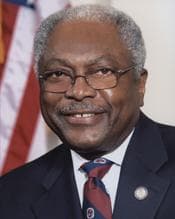
James E. Clyburn
Democratic Representative
South Carolina
Cosponsors (75)
Dwight Evans (Democratic)Marcy Kaptur (Democratic)Tom O'Halleran (Democratic)John Garamendi (Democratic)Ruben Gallego (Democratic)Jared Huffman (Democratic)Marc A. Veasey (Democratic)Barbara Lee (Democratic)Robin L. Kelly (Democratic)Tom Malinowski (Democratic)Ritchie Torres (Democratic)Mark Pocan (Democratic)Abigail Davis Spanberger (Democratic)Lisa Blunt Rochester (Democratic)David J. Trone (Democratic)Ed Case (Democratic)Derek Kilmer (Democratic)John A. Yarmuth (Democratic)Joe Courtney (Democratic)Sanford D. Bishop (Democratic)Ilhan Omar (Democratic)Terri A. Sewell (Democratic)Steven Horsford (Democratic)Jimmy Panetta (Democratic)Dina Titus (Democratic)Michael F. Doyle (Democratic)Suzan K. DelBene (Democratic)Angie Craig (Democratic)Thomas R. Suozzi (Democratic)Adriano Espaillat (Democratic)Ann Kirkpatrick (Democratic)Frank J. Mrvan (Democratic)Peter A. DeFazio (Democratic)Daniel T. Kildee (Democratic)Jake Auchincloss (Democratic)Ro Khanna (Democratic)A. Donald McEachin (Democratic)Kaiali'i Kahele (Democratic)Ann M. Kuster (Democratic)John B. Larson (Democratic)Joaquin Castro (Democratic)Jim Cooper (Democratic)Joseph D. Morelle (Democratic)G. K. Butterfield (Democratic)Elaine G. Luria (Democratic)Marilyn Strickland (Democratic)Jahana Hayes (Democratic)Anna G. Eshoo (Democratic)Betty McCollum (Democratic)Eleanor Holmes Norton (Democratic)Antonio Delgado (Democratic)Joe Neguse (Democratic)Cynthia Axne (Democratic)Diana DeGette (Democratic)Adam Smith (Democratic)Ron Kind (Democratic)Julia Brownley (Democratic)Jerry McNerney (Democratic)Peter Welch (Democratic)Colin Z. Allred (Democratic)Earl Blumenauer (Democratic)Deborah K. Ross (Democratic)Lori Trahan (Democratic)Linda T. Sánchez (Democratic)Ed Perlmutter (Democratic)Zoe Lofgren (Democratic)Jason Crow (Democratic)Teresa Leger Fernandez (Democratic)Frank Pallone (Democratic)Grace Meng (Democratic)Cheri Bustos (Democratic)Rashida Tlaib (Democratic)Jamaal Bowman (Democratic)Lauren Underwood (Democratic)Grace F. Napolitano (Democratic)
Committees (6)
• Transportation and Infrastructure Committee• Commodity Markets, Digital Assets, and Rural Development Subcommittee• Agriculture Committee• Highways and Transit Subcommittee• Communications and Technology Subcommittee• Energy and Commerce Committee
- Introduced
- In Committee
- On Floor
- Passed Chamber
- Enacted
Accessible, Affordable Internet for All Act This bill reauthorizes through FY2026, revises, and establishes grants and activities to promote access to broadband internet and other telecommunication services. The bill addresses digital equity and inclusion through grants and by requiring studies on barriers to adoption of broadband services and related matters. The bill addresses broadband affordability and access. It (1) reauthorizes and expands various programs that subsidize or otherwise support broadband services for eligible households, schools and libraries, and tribal lands and populations; and (2) establishes a program for expanding broadband service for underserved areas and community support organizations (e.g., schools and religious organizations). Additionally, the Federal Communications Commission (FCC) must award grants and take other actions to expand programs that verify an individual's eligibility for subsidized services. The bill addresses broadband data collection, disclosure, and sharing. The FCC must (1) issue rules regarding the collection of pricing data and labels that disclose information about broadband plans to consumers, and (2) collaborate and share data with federal agencies and other stakeholders. The bill makes financing (e.g., low-interest loans) available to communities and public-private partnerships for broadband infrastructure investments. Additionally, the Department of Transportation must require states to install conduits for broadband cables as part of certain highway projects. The bill also sets up a task force on nationwide dig once requirements (i.e., policies or practices to minimize excavations of highway rights-of-way when installing telecommunications infrastructure). Further, the bill preempts state laws that prohibit certain telecommunications service providers (e.g., public providers) from providing high-speed broadband services.
View Full TextSuggested Questions
Get AI-generated questions to help you understand this bill better
Timeline
Introduced in House
Referred to the Committee on Energy and Commerce, and in addition to the Committees on Transportation and Infrastructure, and Agriculture, for a period to be subsequently determined by the Speaker, in each case for consideration of such provisions as fall within the jurisdiction of the committee concerned.
Referred to the Subcommittee on Communications and Technology.
Referred to the Subcommittee on Highways and Transit.
Referred to the Subcommittee on Commodity Exchanges, Energy, and Credit.
Science, Technology, Communications
Administrative law and regulatory proceduresAdult education and literacyAgingAppropriationsCardiovascular and respiratory healthCommunity life and organizationComputers and information technologyComputer security and identity theftCongressional oversightCorrectional facilities and imprisonmentDepartment of CommerceDigital mediaDisability and paralysisEconomic developmentEducational facilities and institutionsElementary and secondary educationEmergency medical services and trauma careExecutive agency funding and structureFederal Communications Commission (FCC)Food assistance and reliefForeign language and bilingual programsGovernment information and archivesGovernment lending and loan guaranteesGovernment studies and investigationsGovernment trust fundsHealth care coverage and accessHealth facilities and institutionsHealth technology, devices, suppliesHigher educationIndian social and development programsInfectious and parasitic diseasesInfrastructure developmentInternet and video servicesInternet, web applications, social mediaLabor-management relationsLabor standardsLaw enforcement administration and fundingLibraries and archivesMedicaidMotor carriersMotor vehiclesMuseums, exhibitions, cultural centersPerformance measurementPoverty and welfare assistancePreschool educationPublic contracts and procurementPublic housingPublic-private cooperationRacial and ethnic relationsRight of privacyRoads and highwaysRural conditions and developmentSocial work, volunteer service, charitable organizationsState and local government operationsTelecommunication rates and feesTelephone and wireless communicationUnemploymentVeterans' education, employment, rehabilitationWages and earnings
Accessible, Affordable Internet for All Act
USA117th CongressHR-1783| House
| Updated: 4/28/2021
Accessible, Affordable Internet for All Act This bill reauthorizes through FY2026, revises, and establishes grants and activities to promote access to broadband internet and other telecommunication services. The bill addresses digital equity and inclusion through grants and by requiring studies on barriers to adoption of broadband services and related matters. The bill addresses broadband affordability and access. It (1) reauthorizes and expands various programs that subsidize or otherwise support broadband services for eligible households, schools and libraries, and tribal lands and populations; and (2) establishes a program for expanding broadband service for underserved areas and community support organizations (e.g., schools and religious organizations). Additionally, the Federal Communications Commission (FCC) must award grants and take other actions to expand programs that verify an individual's eligibility for subsidized services. The bill addresses broadband data collection, disclosure, and sharing. The FCC must (1) issue rules regarding the collection of pricing data and labels that disclose information about broadband plans to consumers, and (2) collaborate and share data with federal agencies and other stakeholders. The bill makes financing (e.g., low-interest loans) available to communities and public-private partnerships for broadband infrastructure investments. Additionally, the Department of Transportation must require states to install conduits for broadband cables as part of certain highway projects. The bill also sets up a task force on nationwide dig once requirements (i.e., policies or practices to minimize excavations of highway rights-of-way when installing telecommunications infrastructure). Further, the bill preempts state laws that prohibit certain telecommunications service providers (e.g., public providers) from providing high-speed broadband services.
View Full TextSuggested Questions
Get AI-generated questions to help you understand this bill better
Timeline
Introduced in House
Referred to the Committee on Energy and Commerce, and in addition to the Committees on Transportation and Infrastructure, and Agriculture, for a period to be subsequently determined by the Speaker, in each case for consideration of such provisions as fall within the jurisdiction of the committee concerned.
Referred to the Subcommittee on Communications and Technology.
Referred to the Subcommittee on Highways and Transit.
Referred to the Subcommittee on Commodity Exchanges, Energy, and Credit.
James E. Clyburn
Democratic Representative
South Carolina
Cosponsors (75)
Dwight Evans (Democratic)Marcy Kaptur (Democratic)Tom O'Halleran (Democratic)John Garamendi (Democratic)Ruben Gallego (Democratic)Jared Huffman (Democratic)Marc A. Veasey (Democratic)Barbara Lee (Democratic)Robin L. Kelly (Democratic)Tom Malinowski (Democratic)Ritchie Torres (Democratic)Mark Pocan (Democratic)Abigail Davis Spanberger (Democratic)Lisa Blunt Rochester (Democratic)David J. Trone (Democratic)Ed Case (Democratic)Derek Kilmer (Democratic)John A. Yarmuth (Democratic)Joe Courtney (Democratic)Sanford D. Bishop (Democratic)Ilhan Omar (Democratic)Terri A. Sewell (Democratic)Steven Horsford (Democratic)Jimmy Panetta (Democratic)Dina Titus (Democratic)Michael F. Doyle (Democratic)Suzan K. DelBene (Democratic)Angie Craig (Democratic)Thomas R. Suozzi (Democratic)Adriano Espaillat (Democratic)Ann Kirkpatrick (Democratic)Frank J. Mrvan (Democratic)Peter A. DeFazio (Democratic)Daniel T. Kildee (Democratic)Jake Auchincloss (Democratic)Ro Khanna (Democratic)A. Donald McEachin (Democratic)Kaiali'i Kahele (Democratic)Ann M. Kuster (Democratic)John B. Larson (Democratic)Joaquin Castro (Democratic)Jim Cooper (Democratic)Joseph D. Morelle (Democratic)G. K. Butterfield (Democratic)Elaine G. Luria (Democratic)Marilyn Strickland (Democratic)Jahana Hayes (Democratic)Anna G. Eshoo (Democratic)Betty McCollum (Democratic)Eleanor Holmes Norton (Democratic)Antonio Delgado (Democratic)Joe Neguse (Democratic)Cynthia Axne (Democratic)Diana DeGette (Democratic)Adam Smith (Democratic)Ron Kind (Democratic)Julia Brownley (Democratic)Jerry McNerney (Democratic)Peter Welch (Democratic)Colin Z. Allred (Democratic)Earl Blumenauer (Democratic)Deborah K. Ross (Democratic)Lori Trahan (Democratic)Linda T. Sánchez (Democratic)Ed Perlmutter (Democratic)Zoe Lofgren (Democratic)Jason Crow (Democratic)Teresa Leger Fernandez (Democratic)Frank Pallone (Democratic)Grace Meng (Democratic)Cheri Bustos (Democratic)Rashida Tlaib (Democratic)Jamaal Bowman (Democratic)Lauren Underwood (Democratic)Grace F. Napolitano (Democratic)
Committees (6)
• Transportation and Infrastructure Committee• Commodity Markets, Digital Assets, and Rural Development Subcommittee• Agriculture Committee• Highways and Transit Subcommittee• Communications and Technology Subcommittee• Energy and Commerce Committee
Science, Technology, Communications
Related Bills
- HR 117-3703: Nationwide Dig Once Act of 2021
- HR 117-1714: Speedy Updates Act of 2021
- S 117-745: Accessible, Affordable Internet for All Act
- HR 117-1590: Tribal Internet Expansion Act of 2021
- S 117-741: Broadband Infrastructure Finance and Innovation Act of 2021
- HR 117-1672: Connect America Act of 2021
- HR 117-1631: Community Broadband Act of 2021
- HR 117-1700: Broadband Infrastructure Finance and Innovation Act of 2021
- S 117-724: A bill to require the Federal Communications Commission to make the provision of Wi-Fi access on school buses eligible for E-rate support.
- S 117-1460: Community Broadband Act of 2021
- Introduced
- In Committee
- On Floor
- Passed Chamber
- Enacted
Administrative law and regulatory proceduresAdult education and literacyAgingAppropriationsCardiovascular and respiratory healthCommunity life and organizationComputers and information technologyComputer security and identity theftCongressional oversightCorrectional facilities and imprisonmentDepartment of CommerceDigital mediaDisability and paralysisEconomic developmentEducational facilities and institutionsElementary and secondary educationEmergency medical services and trauma careExecutive agency funding and structureFederal Communications Commission (FCC)Food assistance and reliefForeign language and bilingual programsGovernment information and archivesGovernment lending and loan guaranteesGovernment studies and investigationsGovernment trust fundsHealth care coverage and accessHealth facilities and institutionsHealth technology, devices, suppliesHigher educationIndian social and development programsInfectious and parasitic diseasesInfrastructure developmentInternet and video servicesInternet, web applications, social mediaLabor-management relationsLabor standardsLaw enforcement administration and fundingLibraries and archivesMedicaidMotor carriersMotor vehiclesMuseums, exhibitions, cultural centersPerformance measurementPoverty and welfare assistancePreschool educationPublic contracts and procurementPublic housingPublic-private cooperationRacial and ethnic relationsRight of privacyRoads and highwaysRural conditions and developmentSocial work, volunteer service, charitable organizationsState and local government operationsTelecommunication rates and feesTelephone and wireless communicationUnemploymentVeterans' education, employment, rehabilitationWages and earnings