Commander John Scott Hannon Veterans Mental Health Care Improvement Act of 2019
USA116th CongressS-785| Senate
| Updated: 10/17/2020
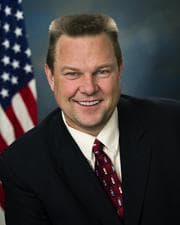
Jon Tester
Democratic Senator
Montana
Cosponsors (53)
Jeanne Shaheen (Democratic)Mazie K. Hirono (Democratic)Tammy Duckworth (Democratic)Margaret Wood Hassan (Democratic)Dan Sullivan (Republican)Tom Udall (Democratic)Dianne Feinstein (Democratic)Catherine Cortez Masto (Democratic)Richard J. Durbin (Democratic)Edward J. Markey (Democratic)Jack Reed (Democratic)Jerry Moran (Republican)Kirsten E. Gillibrand (Democratic)James E. Risch (Republican)Christopher A. Coons (Democratic)Kamala D. Harris (Democratic)Marsha Blackburn (Republican)Mark R. Warner (Democratic)Amy Klobuchar (Democratic)Roger F. Wicker (Republican)Martha McSally (Republican)John Boozman (Republican)Doug Jones (Democratic)Robert P. Casey (Democratic)Tim Kaine (Democratic)Kyrsten Sinema (Independent)Jacky Rosen (Democratic)Joe Manchin (Independent)Mike Rounds (Republican)Kevin Cramer (Republican)Christopher Murphy (Democratic)Debbie Stabenow (Democratic)Martin Heinrich (Democratic)Michael F. Bennet (Democratic)Patty Murray (Democratic)Tina Smith (Democratic)Bernard Sanders (Independent)Pat Roberts (Republican)Tammy Baldwin (Democratic)John Cornyn (Republican)Cory A. Booker (Democratic)Robert Menendez (Democratic)Jeff Merkley (Democratic)Susan M. Collins (Republican)Gary C. Peters (Democratic)Cory Gardner (Republican)Rob Portman (Republican)Steve Daines (Republican)Ron Wyden (Democratic)John Hoeven (Republican)Richard Blumenthal (Democratic)Mike Crapo (Republican)Lisa Murkowski (Republican)
Veterans' Affairs Committee
- Introduced
- In Committee
- On Floor
- Passed Chamber
- Enacted
Commander John Scott Hannon Veterans Mental Health Care Improvement Act of 2019 This bill makes updates related to Department of Veterans Affairs (VA) transition assistance, mental health care, care for women veterans, and telehealth care. TITLE I--IMPROVEMENT OF TRANSITION OF INDIVIDUALS TO SERVICES FROM DEPARTMENT OF VETERANS AFFAIRS (Sec. 101) This section requires the VA to submit a plan for the provision of VA health care to any veteran during the one-year period following the discharge or release from active military, naval, or air service. (Sec. 102) The Department of Defense (DOD) and the VA must jointly review and report on the records of each former member of the Armed Forces who died by suicide within one year of separation from the Armed Forces during the five-year period preceding the enactment of this bill. (Sec. 103) The VA must report on the Recovery Engagement and Coordination for Health—Veterans Enhanced Treatment (REACH VET) program to assess, among other elements, the impact of the program on rates of suicide among veterans. (Sec. 104) This section updates reporting requirements related to the mental and behavioral health care provided by the VA to former members of the Armed Forces with other than honorable discharge. TITLE II--SUICIDE PREVENTION (Sec. 201) This section establishes the Staff Sergeant Parker Gordon Fox Suicide Prevention Grant Program, under which the VA must award grants for a period of three years to eligible entities for the provision of suicide prevention services to veterans and their families. A nongovernmental entity must conduct a study on the provision of such grants to evaluate the effectiveness. In certain circumstances, entities receiving grants must refer eligible individuals for additional care at the VA. If it is clinically appropriate, the VA must provide an individual receiving suicide prevention services through a grant with a mental health care assessment or services. If an individual refuses such care, ongoing clinical services provided by a grantee must be at the expense of the grantee. (Sec. 202) The VA must complete a study and report on the feasibility and advisability of providing complementary and integrative health treatments, such as acupuncture, at all VA medical facilities. (Sec. 203) After the Creating Options for Veterans' Expedited Recovery Commission submits its final report, the VA must conduct a three-year pilot program to provide complementary and integrative health services (e.g., animal therapy) to certain veterans from the VA or non-VA entities for the treatment of post-traumatic stress disorder (PTSD), depression, or anxiety. The VA is authorized to extend the duration based on the results of the implementation. (Sec. 204) The VA must seek to enter into an agreement with the National Academies of Sciences, Engineering, and Medicine to study the effects of opioids and benzodiazepine on all-cause mortality of veterans, including suicide, regardless of whether information relating to such deaths has been reported by the Centers for Disease Control and Prevention. The Government Accountability Office (GAO) must conduct a review of the staffing levels for mental health professionals of the VA. (Sec. 205) This section requires the GAO to report on the VA's efforts to manage veterans at high risk for suicide. TITLE III--PROGRAMS, STUDIES, AND GUIDELINES ON MENTAL HEALTH (Sec. 301) This section requires the VA to conduct a study on the connection between living at high altitude and the risk of developing depression or dying by suicide among veterans. Depending on the results, a follow-up study may be required to identify biological causes and effective treatments. (Sec. 302) The VA must develop a clinical provider treatment toolkit and training materials for the evidence-based management of comorbid mental health conditions, comorbid mental health and substance use disorders, and a comorbid mental health condition and chronic pain. (Sec. 303) The VA and DOD (through the Assessment and Management of Patients at Risk for Suicide Work Group) must issue an update to the VA/DOD Clinical Practice Guideline for Assessment and Management of Patients at Risk for Suicide that (1) considers gender-specific factors; and (2) includes guidance with respect to the efficacy of certain alternative therapies, such as meditation and animal therapy. (Sec. 304) This section requires the VA to complete the development of a clinical practice guideline or guidelines for the treatment of serious mental illness. Under this section, such guidelines must address the treatment of schizophrenia, schizoaffective disorder, and persistent mood disorder (including bipolar disorder I and II). The VA must establish the Serious Mental Illness Work Group with DOD and the Department of Health and Human Services to develop such clinical practice guideline or guidelines. Additionally, the VA must complete an assessment of the 2016 Clinical Practice Guidelines for the Management of Major Depressive Disorders to determine if an update is necessary. (Sec. 305) The VA must implement the Precision Medicine for Veterans Initiative to identify and validate brain and mental health biomarkers among veterans, with specific consideration for depression, anxiety, PTSD, bipolar disorder, and traumatic brain injury. The VA must develop data privacy and security measures to ensure the information of veterans participating in the initiative is kept private and secure. The VA must also coordinate efforts of the initiative with the Million Veterans Program. (Sec. 306) This section authorizes the VA to contract with academic institutions or other qualified entities to carry out any statistical analyses and data evaluation as required by law. TITLE IV--OVERSIGHT OF MENTAL HEALTH CARE AND RELATED SERVICES (Sec. 401) The VA must enter into an agreement with a nonfederal government entity that has expertise in conducting and evaluating research-based studies to conduct a study on the effectiveness of the VA's suicide prevention and mental health outreach materials and campaigns. (Sec. 402) The VA must establish measurable goals to evaluate the effectiveness of the VA's mental health and suicide prevention media outreach campaigns. (Sec. 403) This section requires the GAO to conduct a management review of the mental health and suicide prevention services provided by the VA. (Sec. 404) The GAO must report on the VA's efforts to integrate (1) mental health care into VA primary care clinics, and (2) community-based mental health care (care provided by a non-VA provider but paid for by the VA) into the Veterans Health Administration (VHA). (Sec. 405) The VA and DOD must report on their mental health programs, including joint programs of the departments. The VA must establish a joint VA/DOD Intrepid Spirit Center to serve active duty members of the Armed Forces, members of the reserve components, and veterans for mutual benefit and growth in treatment and care for PTSD and traumatic brain injury. TITLE V--IMPROVEMENT OF MENTAL HEALTH MEDICAL WORKFORCE (Sec. 501) The VA must submit a plan to address the staffing of mental health providers at its facilities. Additionally, the VA must develop an occupational series for its licensed professional mental health counselors and marriage and family therapists. (Sec. 502) This section requires the VA to carry out the Department of Veterans Affairs Readjustment Counseling Service Scholarship Program under the Educational Assistance Program. (Sec. 503) The GAO must report on the VA's Readjustment Counseling Service. Such report must include, among other elements, an assessment of barriers to care at Vet Centers. (Sec. 504) This section expands the annual reporting requirement on the activities of the Readjustment Counseling Service to include additional elements. (Sec. 505) The VA must conduct a survey on the attitudes of veterans toward the VA offering appointments outside the usual operating hours of VA facilities, including via telehealth appointments. The VA must also study the feasibility and advisability of offering appointments outside the usual operating hours (Sec. 506) The VA must ensure each of its medical centers is staffed with at least one suicide prevention coordinator. In addition, the VA must conduct a study to determine the feasibility and advisability of the realignment and reorganization of suicide prevention coordinators within the Office of Mental Health and Suicide Prevention and the creation of a suicide prevention coordinator program office. (Sec. 507) This section requires the VA to report on its efforts to implement a suicide prevention program for veterans presenting to an emergency department or urgent care center of the VHA who are assessed to be at risk for suicide and are safe to be discharged home. TITLE VI--IMPROVEMENT OF CARE AND SERVICES FOR WOMEN VETERANS (Sec. 601) This section requires the VA to expand the capabilities of the Women Veterans Call Center by including a text messaging capability. (Sec. 602) The VA must publish a website providing information for women veterans about the benefits and services available to them. TITLE VII--OTHER MATTERS (Sec. 701) This section requires the VA to award grants to entities for the expansion of telehealth capabilities and provision of telehealth services to veterans. An entity seeking to establish a telehealth access point for veterans without grant funding is authorized to enter into an agreement with the VA to establish such access point. The VA must assess and report on the barriers veterans face in accessing telehealth services. (Sec. 702) This section authorizes the VA to enter partnerships with nonfederal government entities to provide hyperbaric oxygen treatment to veterans to research the effectiveness of such therapy in treating certain conditions (e.g., PTSD). The VA must conduct a systematic review of published research literature on off-label use of hyperbaric oxygen therapy to treat PTSD and traumatic brain injury among veterans and nonveterans. Additionally, the VA must conduct a study on all individuals receiving hyperbaric oxygen therapy through the VA's current pilot program to determine the efficacy and effectiveness for treating PTSD and traumatic brain injury. (Sec. 703) The VA must prescribe specified technical qualifications for appointment as a licensed hearing aid specialist in the VHA. Under this section, at least one licensed hearing aid specialist must be appointed at each VA medical center. (Sec. 704) This section requires the VA to complete policy revisions within the internal directive titled Requirements for the Protection of Human Subjects in Research to allow sponsored clinical research of the VA to use accredited commercial institutional review boards to review VA research proposal protocols. The VA must (1) identify accredited commercial institutional review boards for use in connection with sponsored clinical research of the VA, and (2) establish a process to modify existing approvals if a board loses its accreditation during an ongoing clinical trial. (Sec. 705) This section also requires the VA to establish an Office of Research Reviews within the VA's Office of Information and Technology to perform centralized security reviews and complete security processes for approved research sponsored outside the VA, among other purposes.
Suggested Questions
Get AI-generated questions to help you understand this bill better
Timeline
Introduced in Senate
Read twice and referred to the Committee on Veterans' Affairs.
Committee on Veterans' Affairs. Hearings held. Hearings printed: S.Hrg. 116-179.
Committee on Veterans' Affairs. Ordered to be reported with an amendment in the nature of a substitute favorably.
Committee on Veterans' Affairs. Reported by Senator Moran with an amendment in the nature of a substitute. Without written report.
Placed on Senate Legislative Calendar under General Orders. Calendar No. 498.
Passed/agreed to in Senate: Passed Senate with an amendment by Voice Vote.(text of amendment in the nature of a substitute: CR S4961-4976)
Passed Senate with an amendment by Voice Vote. (text of amendment in the nature of a substitute: CR S4961-4976)
The committee substitute withdrawn by Unanimous Consent. (CR S4935)
Measure laid before Senate by unanimous consent. (consideration: CR S4921-4935)
Message on Senate action sent to the House.
Received in the House.
Held at the desk.
Committee on Veterans' Affairs. Hearings held.
Mr. Takano moved to suspend the rules and pass the bill.
Considered under suspension of the rules. (consideration: CR H4734-4752)
DEBATE - The House proceeded with forty minutes of debate on S. 785.
Passed/agreed to in House: On motion to suspend the rules and pass the bill Agreed to by voice vote.
On motion to suspend the rules and pass the bill Agreed to by voice vote. (text: CR H4734-4749)
Motion to reconsider laid on the table Agreed to without objection.
Presented to President.
Signed by President.
Became Public Law No: 116-171.
Armed Forces and National Security
Alternative treatmentsAnimal protection and human-animal relationshipsCongressional oversightDepartment of Veterans AffairsDrug, alcohol, tobacco useEmergency medical services and trauma careEmployee hiringExecutive agency funding and structureGovernment employee pay, benefits, personnel managementGovernment information and archivesGovernment studies and investigationsHealth care coverage and accessHealth facilities and institutionsHealth information and medical recordsHealth personnelHealth programs administration and fundingHealth promotion and preventive careHealth technology, devices, suppliesHearing, speech, and vision careHigher educationLawyers and legal servicesMedical researchMental healthMilitary medicineMilitary personnel and dependentsNational Guard and reservesNeurological disordersPerformance measurementPublic-private cooperationResearch administration and fundingRight of privacyRural conditions and developmentSocial work, volunteer service, charitable organizationsStudent aid and college costsVeterans' education, employment, rehabilitationVeterans' medical careWomen's employmentWomen's health
Commander John Scott Hannon Veterans Mental Health Care Improvement Act of 2019
USA116th CongressS-785| Senate
| Updated: 10/17/2020
Commander John Scott Hannon Veterans Mental Health Care Improvement Act of 2019 This bill makes updates related to Department of Veterans Affairs (VA) transition assistance, mental health care, care for women veterans, and telehealth care. TITLE I--IMPROVEMENT OF TRANSITION OF INDIVIDUALS TO SERVICES FROM DEPARTMENT OF VETERANS AFFAIRS (Sec. 101) This section requires the VA to submit a plan for the provision of VA health care to any veteran during the one-year period following the discharge or release from active military, naval, or air service. (Sec. 102) The Department of Defense (DOD) and the VA must jointly review and report on the records of each former member of the Armed Forces who died by suicide within one year of separation from the Armed Forces during the five-year period preceding the enactment of this bill. (Sec. 103) The VA must report on the Recovery Engagement and Coordination for Health—Veterans Enhanced Treatment (REACH VET) program to assess, among other elements, the impact of the program on rates of suicide among veterans. (Sec. 104) This section updates reporting requirements related to the mental and behavioral health care provided by the VA to former members of the Armed Forces with other than honorable discharge. TITLE II--SUICIDE PREVENTION (Sec. 201) This section establishes the Staff Sergeant Parker Gordon Fox Suicide Prevention Grant Program, under which the VA must award grants for a period of three years to eligible entities for the provision of suicide prevention services to veterans and their families. A nongovernmental entity must conduct a study on the provision of such grants to evaluate the effectiveness. In certain circumstances, entities receiving grants must refer eligible individuals for additional care at the VA. If it is clinically appropriate, the VA must provide an individual receiving suicide prevention services through a grant with a mental health care assessment or services. If an individual refuses such care, ongoing clinical services provided by a grantee must be at the expense of the grantee. (Sec. 202) The VA must complete a study and report on the feasibility and advisability of providing complementary and integrative health treatments, such as acupuncture, at all VA medical facilities. (Sec. 203) After the Creating Options for Veterans' Expedited Recovery Commission submits its final report, the VA must conduct a three-year pilot program to provide complementary and integrative health services (e.g., animal therapy) to certain veterans from the VA or non-VA entities for the treatment of post-traumatic stress disorder (PTSD), depression, or anxiety. The VA is authorized to extend the duration based on the results of the implementation. (Sec. 204) The VA must seek to enter into an agreement with the National Academies of Sciences, Engineering, and Medicine to study the effects of opioids and benzodiazepine on all-cause mortality of veterans, including suicide, regardless of whether information relating to such deaths has been reported by the Centers for Disease Control and Prevention. The Government Accountability Office (GAO) must conduct a review of the staffing levels for mental health professionals of the VA. (Sec. 205) This section requires the GAO to report on the VA's efforts to manage veterans at high risk for suicide. TITLE III--PROGRAMS, STUDIES, AND GUIDELINES ON MENTAL HEALTH (Sec. 301) This section requires the VA to conduct a study on the connection between living at high altitude and the risk of developing depression or dying by suicide among veterans. Depending on the results, a follow-up study may be required to identify biological causes and effective treatments. (Sec. 302) The VA must develop a clinical provider treatment toolkit and training materials for the evidence-based management of comorbid mental health conditions, comorbid mental health and substance use disorders, and a comorbid mental health condition and chronic pain. (Sec. 303) The VA and DOD (through the Assessment and Management of Patients at Risk for Suicide Work Group) must issue an update to the VA/DOD Clinical Practice Guideline for Assessment and Management of Patients at Risk for Suicide that (1) considers gender-specific factors; and (2) includes guidance with respect to the efficacy of certain alternative therapies, such as meditation and animal therapy. (Sec. 304) This section requires the VA to complete the development of a clinical practice guideline or guidelines for the treatment of serious mental illness. Under this section, such guidelines must address the treatment of schizophrenia, schizoaffective disorder, and persistent mood disorder (including bipolar disorder I and II). The VA must establish the Serious Mental Illness Work Group with DOD and the Department of Health and Human Services to develop such clinical practice guideline or guidelines. Additionally, the VA must complete an assessment of the 2016 Clinical Practice Guidelines for the Management of Major Depressive Disorders to determine if an update is necessary. (Sec. 305) The VA must implement the Precision Medicine for Veterans Initiative to identify and validate brain and mental health biomarkers among veterans, with specific consideration for depression, anxiety, PTSD, bipolar disorder, and traumatic brain injury. The VA must develop data privacy and security measures to ensure the information of veterans participating in the initiative is kept private and secure. The VA must also coordinate efforts of the initiative with the Million Veterans Program. (Sec. 306) This section authorizes the VA to contract with academic institutions or other qualified entities to carry out any statistical analyses and data evaluation as required by law. TITLE IV--OVERSIGHT OF MENTAL HEALTH CARE AND RELATED SERVICES (Sec. 401) The VA must enter into an agreement with a nonfederal government entity that has expertise in conducting and evaluating research-based studies to conduct a study on the effectiveness of the VA's suicide prevention and mental health outreach materials and campaigns. (Sec. 402) The VA must establish measurable goals to evaluate the effectiveness of the VA's mental health and suicide prevention media outreach campaigns. (Sec. 403) This section requires the GAO to conduct a management review of the mental health and suicide prevention services provided by the VA. (Sec. 404) The GAO must report on the VA's efforts to integrate (1) mental health care into VA primary care clinics, and (2) community-based mental health care (care provided by a non-VA provider but paid for by the VA) into the Veterans Health Administration (VHA). (Sec. 405) The VA and DOD must report on their mental health programs, including joint programs of the departments. The VA must establish a joint VA/DOD Intrepid Spirit Center to serve active duty members of the Armed Forces, members of the reserve components, and veterans for mutual benefit and growth in treatment and care for PTSD and traumatic brain injury. TITLE V--IMPROVEMENT OF MENTAL HEALTH MEDICAL WORKFORCE (Sec. 501) The VA must submit a plan to address the staffing of mental health providers at its facilities. Additionally, the VA must develop an occupational series for its licensed professional mental health counselors and marriage and family therapists. (Sec. 502) This section requires the VA to carry out the Department of Veterans Affairs Readjustment Counseling Service Scholarship Program under the Educational Assistance Program. (Sec. 503) The GAO must report on the VA's Readjustment Counseling Service. Such report must include, among other elements, an assessment of barriers to care at Vet Centers. (Sec. 504) This section expands the annual reporting requirement on the activities of the Readjustment Counseling Service to include additional elements. (Sec. 505) The VA must conduct a survey on the attitudes of veterans toward the VA offering appointments outside the usual operating hours of VA facilities, including via telehealth appointments. The VA must also study the feasibility and advisability of offering appointments outside the usual operating hours (Sec. 506) The VA must ensure each of its medical centers is staffed with at least one suicide prevention coordinator. In addition, the VA must conduct a study to determine the feasibility and advisability of the realignment and reorganization of suicide prevention coordinators within the Office of Mental Health and Suicide Prevention and the creation of a suicide prevention coordinator program office. (Sec. 507) This section requires the VA to report on its efforts to implement a suicide prevention program for veterans presenting to an emergency department or urgent care center of the VHA who are assessed to be at risk for suicide and are safe to be discharged home. TITLE VI--IMPROVEMENT OF CARE AND SERVICES FOR WOMEN VETERANS (Sec. 601) This section requires the VA to expand the capabilities of the Women Veterans Call Center by including a text messaging capability. (Sec. 602) The VA must publish a website providing information for women veterans about the benefits and services available to them. TITLE VII--OTHER MATTERS (Sec. 701) This section requires the VA to award grants to entities for the expansion of telehealth capabilities and provision of telehealth services to veterans. An entity seeking to establish a telehealth access point for veterans without grant funding is authorized to enter into an agreement with the VA to establish such access point. The VA must assess and report on the barriers veterans face in accessing telehealth services. (Sec. 702) This section authorizes the VA to enter partnerships with nonfederal government entities to provide hyperbaric oxygen treatment to veterans to research the effectiveness of such therapy in treating certain conditions (e.g., PTSD). The VA must conduct a systematic review of published research literature on off-label use of hyperbaric oxygen therapy to treat PTSD and traumatic brain injury among veterans and nonveterans. Additionally, the VA must conduct a study on all individuals receiving hyperbaric oxygen therapy through the VA's current pilot program to determine the efficacy and effectiveness for treating PTSD and traumatic brain injury. (Sec. 703) The VA must prescribe specified technical qualifications for appointment as a licensed hearing aid specialist in the VHA. Under this section, at least one licensed hearing aid specialist must be appointed at each VA medical center. (Sec. 704) This section requires the VA to complete policy revisions within the internal directive titled Requirements for the Protection of Human Subjects in Research to allow sponsored clinical research of the VA to use accredited commercial institutional review boards to review VA research proposal protocols. The VA must (1) identify accredited commercial institutional review boards for use in connection with sponsored clinical research of the VA, and (2) establish a process to modify existing approvals if a board loses its accreditation during an ongoing clinical trial. (Sec. 705) This section also requires the VA to establish an Office of Research Reviews within the VA's Office of Information and Technology to perform centralized security reviews and complete security processes for approved research sponsored outside the VA, among other purposes.
Suggested Questions
Get AI-generated questions to help you understand this bill better
Timeline
Introduced in Senate
Read twice and referred to the Committee on Veterans' Affairs.
Committee on Veterans' Affairs. Hearings held. Hearings printed: S.Hrg. 116-179.
Committee on Veterans' Affairs. Ordered to be reported with an amendment in the nature of a substitute favorably.
Committee on Veterans' Affairs. Reported by Senator Moran with an amendment in the nature of a substitute. Without written report.
Placed on Senate Legislative Calendar under General Orders. Calendar No. 498.
Passed/agreed to in Senate: Passed Senate with an amendment by Voice Vote.(text of amendment in the nature of a substitute: CR S4961-4976)
Passed Senate with an amendment by Voice Vote. (text of amendment in the nature of a substitute: CR S4961-4976)
The committee substitute withdrawn by Unanimous Consent. (CR S4935)
Measure laid before Senate by unanimous consent. (consideration: CR S4921-4935)
Message on Senate action sent to the House.
Received in the House.
Held at the desk.
Committee on Veterans' Affairs. Hearings held.
Mr. Takano moved to suspend the rules and pass the bill.
Considered under suspension of the rules. (consideration: CR H4734-4752)
DEBATE - The House proceeded with forty minutes of debate on S. 785.
Passed/agreed to in House: On motion to suspend the rules and pass the bill Agreed to by voice vote.
On motion to suspend the rules and pass the bill Agreed to by voice vote. (text: CR H4734-4749)
Motion to reconsider laid on the table Agreed to without objection.
Presented to President.
Signed by President.
Became Public Law No: 116-171.
Jon Tester
Democratic Senator
Montana
Cosponsors (53)
Jeanne Shaheen (Democratic)Mazie K. Hirono (Democratic)Tammy Duckworth (Democratic)Margaret Wood Hassan (Democratic)Dan Sullivan (Republican)Tom Udall (Democratic)Dianne Feinstein (Democratic)Catherine Cortez Masto (Democratic)Richard J. Durbin (Democratic)Edward J. Markey (Democratic)Jack Reed (Democratic)Jerry Moran (Republican)Kirsten E. Gillibrand (Democratic)James E. Risch (Republican)Christopher A. Coons (Democratic)Kamala D. Harris (Democratic)Marsha Blackburn (Republican)Mark R. Warner (Democratic)Amy Klobuchar (Democratic)Roger F. Wicker (Republican)Martha McSally (Republican)John Boozman (Republican)Doug Jones (Democratic)Robert P. Casey (Democratic)Tim Kaine (Democratic)Kyrsten Sinema (Independent)Jacky Rosen (Democratic)Joe Manchin (Independent)Mike Rounds (Republican)Kevin Cramer (Republican)Christopher Murphy (Democratic)Debbie Stabenow (Democratic)Martin Heinrich (Democratic)Michael F. Bennet (Democratic)Patty Murray (Democratic)Tina Smith (Democratic)Bernard Sanders (Independent)Pat Roberts (Republican)Tammy Baldwin (Democratic)John Cornyn (Republican)Cory A. Booker (Democratic)Robert Menendez (Democratic)Jeff Merkley (Democratic)Susan M. Collins (Republican)Gary C. Peters (Democratic)Cory Gardner (Republican)Rob Portman (Republican)Steve Daines (Republican)Ron Wyden (Democratic)John Hoeven (Republican)Richard Blumenthal (Democratic)Mike Crapo (Republican)Lisa Murkowski (Republican)
Veterans' Affairs Committee
Armed Forces and National Security
Related Bills
- S 116-4657: A bill to direct the Secretary of Veterans Affairs to designate one week each year as "Buddy Check Week" for the purpose of outreach and education concerning peer wellness checks for veterans, and for other purposes.
- HR 116-8172: VA Research Technology Act
- HR 116-5867: STOP Veteran Suicide and Substance Abuse Act
- S 116-3195: Promoting Coordination for Veteran Suicide Prevention Act of 2020
- HR 116-2972: To direct the Secretary of Veterans Affairs to improve the communications of the Department of Veterans Affairs relating to services available for women veterans, and for other purposes.
- HR 116-5030: VA Suicide Prevention Services Accountability Act
- HR 116-2898: To direct the Secretary of Veterans Affairs to designate a week as "Buddy Check Week" for the purpose of outreach and education concerning peer wellness checks for veterans, and for other purposes.
- HR 116-8212: ECHO Act
- HR 116-8108: VA Serious Mental Illness Act
- HR 116-7888: REACH VET reporting Act
- Introduced
- In Committee
- On Floor
- Passed Chamber
- Enacted
Alternative treatmentsAnimal protection and human-animal relationshipsCongressional oversightDepartment of Veterans AffairsDrug, alcohol, tobacco useEmergency medical services and trauma careEmployee hiringExecutive agency funding and structureGovernment employee pay, benefits, personnel managementGovernment information and archivesGovernment studies and investigationsHealth care coverage and accessHealth facilities and institutionsHealth information and medical recordsHealth personnelHealth programs administration and fundingHealth promotion and preventive careHealth technology, devices, suppliesHearing, speech, and vision careHigher educationLawyers and legal servicesMedical researchMental healthMilitary medicineMilitary personnel and dependentsNational Guard and reservesNeurological disordersPerformance measurementPublic-private cooperationResearch administration and fundingRight of privacyRural conditions and developmentSocial work, volunteer service, charitable organizationsStudent aid and college costsVeterans' education, employment, rehabilitationVeterans' medical careWomen's employmentWomen's health