Combating Global Corruption Act of 2019
USA116th CongressS-1309| Senate
| Updated: 12/23/2019
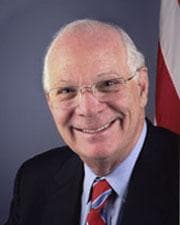
Benjamin L. Cardin
Democratic Senator
Maryland
Cosponsors (9)
Foreign Affairs Committee, Foreign Relations Committee
- Introduced
- In Committee
- On Floor
- Passed Chamber
- Enacted
This bill requires the Department of State to develop a program to combat corruption in countries that receive U.S. aid. The State Department shall annually report to Congress a tiered list of all countries that receive certain U.S. foreign assistance. The first tier shall contain countries that meet minimum standards for combatting public corruption, while the second tier shall contain countries that do not comply but are making significant efforts to do so. Third-tier countries do not meet the minimum anti-corruption standards and are not making significant efforts to do so. For each second- and third-tier ranked country, the State Department shall (1) include a corruption risk assessment and mitigation strategy in each country's integrated country strategy, and (2) use appropriate anti-corruption mechanisms. Such mechanisms include requiring the disclosure of the beneficial ownership of contractors and partners involved in State Department programs and requiring claw-back provisions to recover misappropriated funds. The State Department shall designate an anti-corruption point of contact in the U.S. diplomatic post in each second- or third-tier country and where the State Department determines that such a point of contact is necessary. The point of contact shall be responsible for coordinating a whole-of-government approach to enhancing the ability of foreign countries to combat public corruption.
Suggested Questions
Get AI-generated questions to help you understand this bill better
Timeline
Introduced in Senate
Read twice and referred to the Committee on Foreign Relations.
Committee on Foreign Relations. Ordered to be reported with an amendment in the nature of a substitute favorably.
Committee on Foreign Relations. Reported by Senator Risch with an amendment in the nature of a substitute. Without written report.
Placed on Senate Legislative Calendar under General Orders. Calendar No. 144.
Passed/agreed to in Senate: Passed Senate with an amendment by Unanimous Consent.
Passed Senate with an amendment by Unanimous Consent.
Measure laid before Senate by unanimous consent. (consideration: CR S7234-7236)
The committee substitute withdrawn by Unanimous Consent.
Referred to the House Committee on Foreign Affairs.
Message on Senate action sent to the House.
Received in the House.
International Affairs
Congressional oversightCorporate finance and managementCrime preventionCrime victimsCriminal investigation, prosecution, interrogationDiplomacy, foreign officials, Americans abroadEmployment discrimination and employee rightsForeign aid and international reliefFraud offenses and financial crimesGovernment ethics and transparency, public corruptionGovernment information and archivesGovernment studies and investigationsInternational organizations and cooperationJudicial procedure and administrationPublic contracts and procurementSovereignty, recognition, national governance and status
Combating Global Corruption Act of 2019
USA116th CongressS-1309| Senate
| Updated: 12/23/2019
This bill requires the Department of State to develop a program to combat corruption in countries that receive U.S. aid. The State Department shall annually report to Congress a tiered list of all countries that receive certain U.S. foreign assistance. The first tier shall contain countries that meet minimum standards for combatting public corruption, while the second tier shall contain countries that do not comply but are making significant efforts to do so. Third-tier countries do not meet the minimum anti-corruption standards and are not making significant efforts to do so. For each second- and third-tier ranked country, the State Department shall (1) include a corruption risk assessment and mitigation strategy in each country's integrated country strategy, and (2) use appropriate anti-corruption mechanisms. Such mechanisms include requiring the disclosure of the beneficial ownership of contractors and partners involved in State Department programs and requiring claw-back provisions to recover misappropriated funds. The State Department shall designate an anti-corruption point of contact in the U.S. diplomatic post in each second- or third-tier country and where the State Department determines that such a point of contact is necessary. The point of contact shall be responsible for coordinating a whole-of-government approach to enhancing the ability of foreign countries to combat public corruption.
Suggested Questions
Get AI-generated questions to help you understand this bill better
Timeline
Introduced in Senate
Read twice and referred to the Committee on Foreign Relations.
Committee on Foreign Relations. Ordered to be reported with an amendment in the nature of a substitute favorably.
Committee on Foreign Relations. Reported by Senator Risch with an amendment in the nature of a substitute. Without written report.
Placed on Senate Legislative Calendar under General Orders. Calendar No. 144.
Passed/agreed to in Senate: Passed Senate with an amendment by Unanimous Consent.
Passed Senate with an amendment by Unanimous Consent.
Measure laid before Senate by unanimous consent. (consideration: CR S7234-7236)
The committee substitute withdrawn by Unanimous Consent.
Referred to the House Committee on Foreign Affairs.
Message on Senate action sent to the House.
Received in the House.
Benjamin L. Cardin
Democratic Senator
Maryland
Cosponsors (9)
Foreign Affairs Committee, Foreign Relations Committee
International Affairs
- Introduced
- In Committee
- On Floor
- Passed Chamber
- Enacted
Congressional oversightCorporate finance and managementCrime preventionCrime victimsCriminal investigation, prosecution, interrogationDiplomacy, foreign officials, Americans abroadEmployment discrimination and employee rightsForeign aid and international reliefFraud offenses and financial crimesGovernment ethics and transparency, public corruptionGovernment information and archivesGovernment studies and investigationsInternational organizations and cooperationJudicial procedure and administrationPublic contracts and procurementSovereignty, recognition, national governance and status