USA FREEDOM Reauthorization Act of 2020
USA116th CongressHR-6172| House
| Updated: 6/1/2020
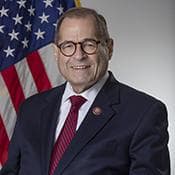
Jerrold Nadler
Democratic Representative
New York
Cosponsors (1)
Homeland Security Committee, Judiciary Committee, Intelligence (Permanent Select) Committee, Oversight and Government Reform Committee
- Introduced
- In Committee
- On Floor
- Passed Chamber
- Enacted
USA FREEDOM Reauthorization Act of 2020 This bill reauthorizes through December 1, 2023, provisions related to intelligence gathering under the Foreign Intelligence and Surveillance Act (FISA) and amends FISA-related provisions. The Federal Bureau of Investigation may not seek certain FISA-authorized orders to obtain (1) call detail records on an ongoing basis, (2) a tangible thing where a person has a reasonable expectation of privacy and a warrant would typically be required, or (3) cellular or GPS location information. A tangible thing obtained under FISA may be retained for no longer than five years except in certain instances, such as when a tangible thing is reasonably believed to be evidence of a crime. If the government intends to use information from a tangible thing obtained under FISA in a trial or other proceeding, it shall be treated as information obtained through electronic surveillance, unless a U.S. authority finds that notifying the person targeted would harm national security. (There are existing protections related to electronic surveillance, such as allowing the targeted person to move to suppress the disclosure of the obtained information in court.) In applications for certain FISA-authorized orders to obtain information or conduct surveillance, the applicant must certify that the Department of Justice (DOJ) has received any information that might raise doubts about the application. The bill imposes additional requirements on FISA-authorized orders targeting (1) a U.S. person, or (2) a federal elected official or candidate. The bill increases criminal penalties for violations related to electronic surveillance conducted under color of law or false statements made to the Foreign Intelligence Surveillance Court (FISA court). A U.S. government employee, officer, or contractor who engages in deliberate misconduct before a FISA court shall be subject to adverse actions, such as removal from the individual's position. The bill broadens the criteria for when a FISA court decision shall be declassified and requires the declassification review and release of such opinions within 180 days of an opinion being issued. The bill broadens the FISA court's authority to appoint an amicus curiae (an outside party that assists in consideration of a case) and expands such amici's powers, such as the power to ask the court to review a decision. An amicus may also seek the court's permission to address any novel or significant privacy or civil liberties issues arising in a case, even if the court did not ask for assistance on that issue. The FISA court may employ legal advisors to assist in considering any matter. Each agency that submits applications to the FISA court shall appoint an officer responsible for compliance with FISA requirements. An application for a FISA court order shall include all information in the government's possession that (1) is material to a ruling on the application, including any exculpatory information; or (2) calls into question the accuracy of the application or the accuracy of an assessment in the application, or otherwise raises doubts about a finding that is a required part of the application. An application for a FISA court order shall include (1) a description of the procedures in place to ensure the accuracy and completeness of the application, and (2) a certification by the applying officer (or designee) that the officer or designee has reviewed the application and accompanying documentation for accuracy and completeness. A judge may not enter a FISA court order unless the described accuracy and completeness procedures comply with requirements prescribed by this bill.
Suggested Questions
Get AI-generated questions to help you understand this bill better
Timeline
Introduced in House
Referred to the Committee on the Judiciary, and in addition to the Committees on Intelligence (Permanent Select), Oversight and Reform, and Homeland Security, for a period to be subsequently determined by the Speaker, in each case for consideration of such provisions as fall within the jurisdiction of the committee concerned.
Rules Committee Resolution H. Res. 891 Reported to House. Rule provides for consideration of S.J. Res. 68, H.R. 2486 and H.R. 6172. Resolution provides for consideration of S.J. Res. 68, the Senate amendment to H.R. 2486, and H.R. 6172. For S.J. Res. 68, the resolution provides for 1 hour of debate and 1 motion to commit. For the Senate amendment to H.R. 2486, the question will be divided and each portion will have 1 hour of debate. H.R. 6172 will have 1 hour ofdebate and 1 motion to recommit with or without instructions.
Received in the Senate. Read the first time. Placed on Senate Legislative Calendar under Read the First Time.
Rule H. Res. 891 passed House.
Considered under the provisions of rule H. Res. 891. (consideration: CR H1622-1637)
Rule provides for consideration of S.J. Res. 68, H.R. 2486 and H.R. 6172. Resolution provides for consideration of S.J. Res. 68, the Senate amendment to H.R. 2486, and H.R. 6172. For S.J. Res. 68, the resolution provides for 1 hour of debate and 1 motion to commit. For the Senate amendment to H.R. 2486, the question will be divided and each portion will have 1 hour of debate. H.R. 6172 will have 1 hour ofdebate and 1 motion to recommit with or without instructions.
DEBATE - The House proceeded with one hour of debate on H.R. 6172.
DEBATE - The House resumed with debate on H.R. 6172.
The previous question was ordered pursuant to the rule.
On passage Passed by the Yeas and Nays: 278 - 136 (Roll no. 98). (text: CR H1622-1627)
View VoteMotion to reconsider laid on the table Agreed to without objection.
Read the second time. Placed on Senate Legislative Calendar under General Orders. Calendar No. 440.
Cloture motion on the motion to proceed to the measure presented in Senate. (CR S1735)
Motion to proceed to consideration of measure made in Senate. (CR S1735)
Motion to proceed to measure considered in Senate. (CR S1748)
Cloture motion on the motion to proceed to the measure withdrawn by unanimous consent in Senate. (CR S1753)
Measure laid before Senate by unanimous consent. (consideration: CR S2388, S2396-2400, S2409-2412, S2414)
Passed Senate, under the order of 5/12/20, having achieved 60 votes in the affirmative, with amendments by Yea-Nay Vote. 80 - 16. Record Vote Number: 92.
View VoteMessage on Senate action sent to the House.
Considered by Senate. (consideration: CR S2432-2441)
Mr. Nadler moved that the House disagree to the Senate amendments, and request a conference. (consideration: CR H2340-2346; text: CR H2340-2342)
DEBATE - The House proceeded with one hour of debate on the motion to disagree to the Senate amendments and request a conference on H.R. 6172.
On motion that the House disagree to the Senate amendments, and request a conference Agreed to by the Yeas and Nays: 284 - 122 (Roll no. 115).
View VoteThe Speaker appointed conferees: Nadler, Schiff, Lofgren, Jordan, and Nunes.
Message on House action received in Senate and at desk: House requests a conference.
Armed Forces and National Security
Accounting and auditingAdministrative law and regulatory proceduresBusiness recordsCongressional electionsCongressional oversightCriminal investigation, prosecution, interrogationCriminal justice information and recordsCriminal procedure and sentencingDepartment of JusticeElections, voting, political campaign regulationEmployee performanceEvidence and witnessesExecutive agency funding and structureFederal officialsFirst Amendment rightsFraud offenses and financial crimesGeography and mappingGovernment employee pay, benefits, personnel managementGovernment ethics and transparency, public corruptionGovernment information and archivesGovernment studies and investigationsIntelligence activities, surveillance, classified informationJudicial procedure and administrationJudicial review and appealsPrivacy and Civil Liberties Oversight BoardRacial and ethnic relationsReligionRight of privacySex, gender, sexual orientation discriminationSpecialized courtsSupreme CourtTelephone and wireless communication
USA FREEDOM Reauthorization Act of 2020
USA116th CongressHR-6172| House
| Updated: 6/1/2020
USA FREEDOM Reauthorization Act of 2020 This bill reauthorizes through December 1, 2023, provisions related to intelligence gathering under the Foreign Intelligence and Surveillance Act (FISA) and amends FISA-related provisions. The Federal Bureau of Investigation may not seek certain FISA-authorized orders to obtain (1) call detail records on an ongoing basis, (2) a tangible thing where a person has a reasonable expectation of privacy and a warrant would typically be required, or (3) cellular or GPS location information. A tangible thing obtained under FISA may be retained for no longer than five years except in certain instances, such as when a tangible thing is reasonably believed to be evidence of a crime. If the government intends to use information from a tangible thing obtained under FISA in a trial or other proceeding, it shall be treated as information obtained through electronic surveillance, unless a U.S. authority finds that notifying the person targeted would harm national security. (There are existing protections related to electronic surveillance, such as allowing the targeted person to move to suppress the disclosure of the obtained information in court.) In applications for certain FISA-authorized orders to obtain information or conduct surveillance, the applicant must certify that the Department of Justice (DOJ) has received any information that might raise doubts about the application. The bill imposes additional requirements on FISA-authorized orders targeting (1) a U.S. person, or (2) a federal elected official or candidate. The bill increases criminal penalties for violations related to electronic surveillance conducted under color of law or false statements made to the Foreign Intelligence Surveillance Court (FISA court). A U.S. government employee, officer, or contractor who engages in deliberate misconduct before a FISA court shall be subject to adverse actions, such as removal from the individual's position. The bill broadens the criteria for when a FISA court decision shall be declassified and requires the declassification review and release of such opinions within 180 days of an opinion being issued. The bill broadens the FISA court's authority to appoint an amicus curiae (an outside party that assists in consideration of a case) and expands such amici's powers, such as the power to ask the court to review a decision. An amicus may also seek the court's permission to address any novel or significant privacy or civil liberties issues arising in a case, even if the court did not ask for assistance on that issue. The FISA court may employ legal advisors to assist in considering any matter. Each agency that submits applications to the FISA court shall appoint an officer responsible for compliance with FISA requirements. An application for a FISA court order shall include all information in the government's possession that (1) is material to a ruling on the application, including any exculpatory information; or (2) calls into question the accuracy of the application or the accuracy of an assessment in the application, or otherwise raises doubts about a finding that is a required part of the application. An application for a FISA court order shall include (1) a description of the procedures in place to ensure the accuracy and completeness of the application, and (2) a certification by the applying officer (or designee) that the officer or designee has reviewed the application and accompanying documentation for accuracy and completeness. A judge may not enter a FISA court order unless the described accuracy and completeness procedures comply with requirements prescribed by this bill.
Suggested Questions
Get AI-generated questions to help you understand this bill better
Timeline
Introduced in House
Referred to the Committee on the Judiciary, and in addition to the Committees on Intelligence (Permanent Select), Oversight and Reform, and Homeland Security, for a period to be subsequently determined by the Speaker, in each case for consideration of such provisions as fall within the jurisdiction of the committee concerned.
Rules Committee Resolution H. Res. 891 Reported to House. Rule provides for consideration of S.J. Res. 68, H.R. 2486 and H.R. 6172. Resolution provides for consideration of S.J. Res. 68, the Senate amendment to H.R. 2486, and H.R. 6172. For S.J. Res. 68, the resolution provides for 1 hour of debate and 1 motion to commit. For the Senate amendment to H.R. 2486, the question will be divided and each portion will have 1 hour of debate. H.R. 6172 will have 1 hour ofdebate and 1 motion to recommit with or without instructions.
Received in the Senate. Read the first time. Placed on Senate Legislative Calendar under Read the First Time.
Rule H. Res. 891 passed House.
Considered under the provisions of rule H. Res. 891. (consideration: CR H1622-1637)
Rule provides for consideration of S.J. Res. 68, H.R. 2486 and H.R. 6172. Resolution provides for consideration of S.J. Res. 68, the Senate amendment to H.R. 2486, and H.R. 6172. For S.J. Res. 68, the resolution provides for 1 hour of debate and 1 motion to commit. For the Senate amendment to H.R. 2486, the question will be divided and each portion will have 1 hour of debate. H.R. 6172 will have 1 hour ofdebate and 1 motion to recommit with or without instructions.
DEBATE - The House proceeded with one hour of debate on H.R. 6172.
DEBATE - The House resumed with debate on H.R. 6172.
The previous question was ordered pursuant to the rule.
On passage Passed by the Yeas and Nays: 278 - 136 (Roll no. 98). (text: CR H1622-1627)
View VoteMotion to reconsider laid on the table Agreed to without objection.
Read the second time. Placed on Senate Legislative Calendar under General Orders. Calendar No. 440.
Cloture motion on the motion to proceed to the measure presented in Senate. (CR S1735)
Motion to proceed to consideration of measure made in Senate. (CR S1735)
Motion to proceed to measure considered in Senate. (CR S1748)
Cloture motion on the motion to proceed to the measure withdrawn by unanimous consent in Senate. (CR S1753)
Measure laid before Senate by unanimous consent. (consideration: CR S2388, S2396-2400, S2409-2412, S2414)
Passed Senate, under the order of 5/12/20, having achieved 60 votes in the affirmative, with amendments by Yea-Nay Vote. 80 - 16. Record Vote Number: 92.
View VoteMessage on Senate action sent to the House.
Considered by Senate. (consideration: CR S2432-2441)
Mr. Nadler moved that the House disagree to the Senate amendments, and request a conference. (consideration: CR H2340-2346; text: CR H2340-2342)
DEBATE - The House proceeded with one hour of debate on the motion to disagree to the Senate amendments and request a conference on H.R. 6172.
On motion that the House disagree to the Senate amendments, and request a conference Agreed to by the Yeas and Nays: 284 - 122 (Roll no. 115).
View VoteThe Speaker appointed conferees: Nadler, Schiff, Lofgren, Jordan, and Nunes.
Message on House action received in Senate and at desk: House requests a conference.
Jerrold Nadler
Democratic Representative
New York
Cosponsors (1)
Homeland Security Committee, Judiciary Committee, Intelligence (Permanent Select) Committee, Oversight and Government Reform Committee
Armed Forces and National Security
Related Bills
- S 116-3421: USA FREEDOM Reauthorization Act of 2020
- HRES 116-891: Providing for consideration of the joint resolution (S.J. Res. 68) to direct the removal of United States Armed Forces from hostilities against the Islamic Republic of Iran that have not been authorized by Congress; providing for consideration of the Senate amendment to the bill (H.R. 2486) to reauthorize mandatory funding programs for historically Black colleges and universities and other minority-serving institutions; providing for consideration of the bill (H.R. 6172) to amend the Foreign Intelligence Surveillance Act of 1978 to prohibit the production of certain business records, and for other purposes; and for other purposes.
- HRES 116-981: Providing for consideration of the Senate amendments to the bill (H.R. 6172) to amend the Foreign Intelligence Surveillance Act of 1978 to prohibit the production of certain business records, and for other purposes.
- Introduced
- In Committee
- On Floor
- Passed Chamber
- Enacted
Accounting and auditingAdministrative law and regulatory proceduresBusiness recordsCongressional electionsCongressional oversightCriminal investigation, prosecution, interrogationCriminal justice information and recordsCriminal procedure and sentencingDepartment of JusticeElections, voting, political campaign regulationEmployee performanceEvidence and witnessesExecutive agency funding and structureFederal officialsFirst Amendment rightsFraud offenses and financial crimesGeography and mappingGovernment employee pay, benefits, personnel managementGovernment ethics and transparency, public corruptionGovernment information and archivesGovernment studies and investigationsIntelligence activities, surveillance, classified informationJudicial procedure and administrationJudicial review and appealsPrivacy and Civil Liberties Oversight BoardRacial and ethnic relationsReligionRight of privacySex, gender, sexual orientation discriminationSpecialized courtsSupreme CourtTelephone and wireless communication