Patient Protection and Affordable Care Enhancement Act
USA116th CongressHR-1425| House
| Updated: 9/8/2020
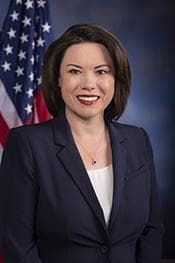
Angie Craig
Democratic Representative
Minnesota
Cosponsors (61)
Kim Schrier (Democratic)Gilbert Ray Cisneros (Democratic)Adam B. Schiff (Democratic)Robin L. Kelly (Democratic)Joseph P. Kennedy (Democratic)Abigail Davis Spanberger (Democratic)Ben McAdams (Democratic)Lisa Blunt Rochester (Democratic)David J. Trone (Democratic)Ed Case (Democratic)Jackie Speier (Democratic)Kathleen M. Rice (Democratic)Raul Ruiz (Democratic)Derek Kilmer (Democratic)Jefferson Van Drew (Republican)Ben Ray Luján (Democratic)Max Rose (Democratic)Bobby L. Rush (Democratic)Debbie Dingell (Democratic)Tony Cárdenas (Democratic)Jennifer Wexton (Democratic)Scott H. Peters (Democratic)Paul Tonko (Democratic)Haley M. Stevens (Democratic)Ann Kirkpatrick (Democratic)Ann M. Kuster (Democratic)Kurt Schrader (Democratic)Katie Hill (Democratic)Harley Rouda (Democratic)Elaine G. Luria (Democratic)Doris O. Matsui (Democratic)Dean Phillips (Democratic)James A. Himes (Democratic)Anna G. Eshoo (Democratic)Anthony Brindisi (Democratic)Ami Bera (Democratic)Betty McCollum (Democratic)Sharice Davids (Democratic)Denny Heck (Democratic)Daniel Lipinski (Democratic)Abby Finkenauer (Democratic)Salud O. Carbajal (Democratic)Jamie Raskin (Democratic)Jim Costa (Democratic)Joe Neguse (Democratic)Debbie Mucarsel-Powell (Democratic)Janice D. Schakowsky (Democratic)Julia Brownley (Democratic)Jeff Fortenberry (Republican)Yvette D. Clarke (Democratic)Rick Larsen (Democratic)Peter Welch (Democratic)Colin Z. Allred (Democratic)Zoe Lofgren (Democratic)Nanette Diaz Barragán (Democratic)Frank Pallone (Democratic)Gwen Moore (Democratic)Susie Lee (Democratic)Cheri Bustos (Democratic)Gerald E. Connolly (Democratic)Lauren Underwood (Democratic)
Health Subcommittee, Energy and Commerce Committee
- Introduced
- In Committee
- On Floor
- Passed Chamber
- Enacted
Patient Protection and Affordable Care Enhancement Act This bill modifies various health insurance programs related to consumer costs for private health insurance plans, Medicaid funding and eligibility, and prescription drug pricing. Specifically, the bill increases the amount and income thresholds for the premium assistance tax credit program and expands access to such tax credit for employees with employer-provided family plans that cost in excess of 9.5% of the employee's household income. Further, the bill provides additional funding for states to establish health insurance exchanges and establishes the Improve Health Insurance Affordability Fund. States must use allocated funds to (1) issue reinsurance payments to health insurers (i.e., reimbursements to protect insurers against exceedingly high claims) for individual health insurance coverage, or (2) provide other assistance to reduce out-of-pocket costs (e.g., copayments, coinsurance, and deductibles) for qualified health plans offered in the individual market through an exchange. The bill also nullifies a rule that expands short-term, limited-duration health insurance plans. Such plans may offer coverage for only a limited amount of time and are exempt from certain coverage requirements. The bill also nullifies guidance that alters how states may satisfy the criteria for approval of State Innovation Waivers from certain health insurance coverage requirements. Additionally, the bill directs the Department of Health and Human Services (HHS) to conduct outreach, education, and reporting activities related to enrollment in plans through health insurance exchanges, particularly in areas with disparities in income or health outcomes. It also establishes and funds grants to states to promote enrollment in health insurance coverage and requires health insurance exchanges to establish network adequacy standards. The bill makes recipients of benefits under the Deferred Action for Childhood Arrivals Program eligible for qualified health plans offered through such exchanges. With respect to Medicaid, the bill increases to 100% the federal share of the cost for states to meet the minimum Medicaid expansion requirements and to cover newly-eligible individuals; the current federal share of such costs is 90%. It also requires states to provide 12 months of continuous coverage to individuals enrolling in Medicaid or the Children's Health Insurance Program (CHIP) and extends postpartum Medicaid and CHIP coverage to 12 months. The bill further reduces federal matching funds for administrative costs and expands reporting requirements for states that have not met specified Medicaid expansion requirements. Additionally, the bill extends through FY2024 the minimum payment requirements for primary care services; permanently extends CHIP funding and eligibility, enrollment, and quality assurance provisions; increases the permissible family income threshold for children whom states may make eligible for Medicaid and CHIP; extends Medicaid coverage to residents of the Freely Associated States (i.e., Federated States of Micronesia, the Republic of the Marshall Islands, and the Republic of Palau); and increases the federal medical assistance percentage for services provided through Indian Health Care Services. The bill also establishes the Fair Drug Pricing Program that directs HHS to negotiate with manufacturers to set the price for selected drugs and biological products. HHS must select certain drugs and biological products that are among the most costly based on spending under Medicare and enter a voluntary negotiation with manufacturers to establish a maximum price for each drug or product. The negotiation must consider, among other factors, the cost of research and development of the selected drug or biological product, the cost of production, national sales data, and information about alternative products. The bill establishes an excise tax on manufacturers that do not comply with a negotiated fair price agreement in the amount of specified percentages of the sales of such drug or product. The bill also creates a fund to implement the Fair Drug Pricing Program.
Suggested Questions
Get AI-generated questions to help you understand this bill better
Timeline
Introduced in House
Referred to the House Committee on Energy and Commerce.
Referred to the Subcommittee on Health.
Subcommittee Consideration and Mark-up Session Held.
Forwarded by Subcommittee to Full Committee (Amended) by the Yeas and Nays: 18 - 13 .
Committee Consideration and Mark-up Session Held.
Ordered to be Reported (Amended) by the Yeas and Nays: 30 - 22.
Placed on the Union Calendar, Calendar No. 334.
Reported (Amended) by the Committee on Energy and Commerce. H. Rept. 116-414.
Rules Committee Resolution H. Res. 1017 Reported to House. Rule provides for consideration of H.R. 1425, H.R. 5332, H.R. 7120, H.R. 7301 and H.J. Res. 90. The resolution provides that the provisions of section 125(c) of the Uruguay Round Agreements Act shall not apply during the remainder of the 116th Congress and the resolution amends H.Res. 967, agreed to on May 15, 2020.
Considered under the provisions of rule H. Res. 1017. (consideration: CR H2599-2644)
Rule provides for consideration of H.R. 1425, H.R. 5332, H.R. 7120, H.R. 7301 and H.J. Res. 90. The resolution provides that the provisions of section 125(c) of the Uruguay Round Agreements Act shall not apply during the remainder of the 116th Congress and the resolution amends H.Res. 967, agreed to on May 15, 2020.
DEBATE - The House proceeded with three hours of debate on H.R. 1425.
The previous question was ordered pursuant to the rule.
Mr. Walden moved to recommit with instructions to the Committee on Energy and Commerce. (text: CR H2642-2643)
Floor summary: DEBATE - The House proceeded with 10 minutes of debate on the Walden motion to recommit with instructions. The instructions contained in the motion seek to require the bill to be reported back to the House with an amendment to prevent the bill from taking effect unless the Secretary of Health and Human Services certifies that no provision of the bill would adversely affect research related to any drug intended to treat or prevent the virus that causes COVID-19.
The previous question on the motion to recommit with instructions was ordered without objection.
POSTPONED PROCEEDINGS - At the conclusion of debate on the motion to recommit with instructions, the Chair put the question on the motion and by voice vote, announced that the noes had prevailed. Mr. Walden demanded the yeas and nays and the Chair postponed further consideration on the motion to recommit until a time to be announced.
Considered as unfinished business. (consideration: CR H2664-2665)
On motion to recommit with instructions Failed by the Yeas and Nays: 187 - 223 (Roll no. 123).
View VoteOn passage Passed by the Yeas and Nays: 234 - 179 (Roll no. 124). (text: CR H2599-2614)
View VoteMotion to reconsider laid on the table Agreed to without objection.
Received in the Senate.
Read the first time. Placed on Senate Legislative Calendar under Read the First Time.
Read the second time. Placed on Senate Legislative Calendar under General Orders. Calendar No. 523.
Health
AppropriationsGovernment trust fundsHealth care costs and insuranceHealth care coverage and accessHealth programs administration and fundingState and local finance
Patient Protection and Affordable Care Enhancement Act
USA116th CongressHR-1425| House
| Updated: 9/8/2020
Patient Protection and Affordable Care Enhancement Act This bill modifies various health insurance programs related to consumer costs for private health insurance plans, Medicaid funding and eligibility, and prescription drug pricing. Specifically, the bill increases the amount and income thresholds for the premium assistance tax credit program and expands access to such tax credit for employees with employer-provided family plans that cost in excess of 9.5% of the employee's household income. Further, the bill provides additional funding for states to establish health insurance exchanges and establishes the Improve Health Insurance Affordability Fund. States must use allocated funds to (1) issue reinsurance payments to health insurers (i.e., reimbursements to protect insurers against exceedingly high claims) for individual health insurance coverage, or (2) provide other assistance to reduce out-of-pocket costs (e.g., copayments, coinsurance, and deductibles) for qualified health plans offered in the individual market through an exchange. The bill also nullifies a rule that expands short-term, limited-duration health insurance plans. Such plans may offer coverage for only a limited amount of time and are exempt from certain coverage requirements. The bill also nullifies guidance that alters how states may satisfy the criteria for approval of State Innovation Waivers from certain health insurance coverage requirements. Additionally, the bill directs the Department of Health and Human Services (HHS) to conduct outreach, education, and reporting activities related to enrollment in plans through health insurance exchanges, particularly in areas with disparities in income or health outcomes. It also establishes and funds grants to states to promote enrollment in health insurance coverage and requires health insurance exchanges to establish network adequacy standards. The bill makes recipients of benefits under the Deferred Action for Childhood Arrivals Program eligible for qualified health plans offered through such exchanges. With respect to Medicaid, the bill increases to 100% the federal share of the cost for states to meet the minimum Medicaid expansion requirements and to cover newly-eligible individuals; the current federal share of such costs is 90%. It also requires states to provide 12 months of continuous coverage to individuals enrolling in Medicaid or the Children's Health Insurance Program (CHIP) and extends postpartum Medicaid and CHIP coverage to 12 months. The bill further reduces federal matching funds for administrative costs and expands reporting requirements for states that have not met specified Medicaid expansion requirements. Additionally, the bill extends through FY2024 the minimum payment requirements for primary care services; permanently extends CHIP funding and eligibility, enrollment, and quality assurance provisions; increases the permissible family income threshold for children whom states may make eligible for Medicaid and CHIP; extends Medicaid coverage to residents of the Freely Associated States (i.e., Federated States of Micronesia, the Republic of the Marshall Islands, and the Republic of Palau); and increases the federal medical assistance percentage for services provided through Indian Health Care Services. The bill also establishes the Fair Drug Pricing Program that directs HHS to negotiate with manufacturers to set the price for selected drugs and biological products. HHS must select certain drugs and biological products that are among the most costly based on spending under Medicare and enter a voluntary negotiation with manufacturers to establish a maximum price for each drug or product. The negotiation must consider, among other factors, the cost of research and development of the selected drug or biological product, the cost of production, national sales data, and information about alternative products. The bill establishes an excise tax on manufacturers that do not comply with a negotiated fair price agreement in the amount of specified percentages of the sales of such drug or product. The bill also creates a fund to implement the Fair Drug Pricing Program.
Suggested Questions
Get AI-generated questions to help you understand this bill better
Timeline
Introduced in House
Referred to the House Committee on Energy and Commerce.
Referred to the Subcommittee on Health.
Subcommittee Consideration and Mark-up Session Held.
Forwarded by Subcommittee to Full Committee (Amended) by the Yeas and Nays: 18 - 13 .
Committee Consideration and Mark-up Session Held.
Ordered to be Reported (Amended) by the Yeas and Nays: 30 - 22.
Placed on the Union Calendar, Calendar No. 334.
Reported (Amended) by the Committee on Energy and Commerce. H. Rept. 116-414.
Rules Committee Resolution H. Res. 1017 Reported to House. Rule provides for consideration of H.R. 1425, H.R. 5332, H.R. 7120, H.R. 7301 and H.J. Res. 90. The resolution provides that the provisions of section 125(c) of the Uruguay Round Agreements Act shall not apply during the remainder of the 116th Congress and the resolution amends H.Res. 967, agreed to on May 15, 2020.
Considered under the provisions of rule H. Res. 1017. (consideration: CR H2599-2644)
Rule provides for consideration of H.R. 1425, H.R. 5332, H.R. 7120, H.R. 7301 and H.J. Res. 90. The resolution provides that the provisions of section 125(c) of the Uruguay Round Agreements Act shall not apply during the remainder of the 116th Congress and the resolution amends H.Res. 967, agreed to on May 15, 2020.
DEBATE - The House proceeded with three hours of debate on H.R. 1425.
The previous question was ordered pursuant to the rule.
Mr. Walden moved to recommit with instructions to the Committee on Energy and Commerce. (text: CR H2642-2643)
Floor summary: DEBATE - The House proceeded with 10 minutes of debate on the Walden motion to recommit with instructions. The instructions contained in the motion seek to require the bill to be reported back to the House with an amendment to prevent the bill from taking effect unless the Secretary of Health and Human Services certifies that no provision of the bill would adversely affect research related to any drug intended to treat or prevent the virus that causes COVID-19.
The previous question on the motion to recommit with instructions was ordered without objection.
POSTPONED PROCEEDINGS - At the conclusion of debate on the motion to recommit with instructions, the Chair put the question on the motion and by voice vote, announced that the noes had prevailed. Mr. Walden demanded the yeas and nays and the Chair postponed further consideration on the motion to recommit until a time to be announced.
Considered as unfinished business. (consideration: CR H2664-2665)
On motion to recommit with instructions Failed by the Yeas and Nays: 187 - 223 (Roll no. 123).
View VoteOn passage Passed by the Yeas and Nays: 234 - 179 (Roll no. 124). (text: CR H2599-2614)
View VoteMotion to reconsider laid on the table Agreed to without objection.
Received in the Senate.
Read the first time. Placed on Senate Legislative Calendar under Read the First Time.
Read the second time. Placed on Senate Legislative Calendar under General Orders. Calendar No. 523.
Angie Craig
Democratic Representative
Minnesota
Cosponsors (61)
Kim Schrier (Democratic)Gilbert Ray Cisneros (Democratic)Adam B. Schiff (Democratic)Robin L. Kelly (Democratic)Joseph P. Kennedy (Democratic)Abigail Davis Spanberger (Democratic)Ben McAdams (Democratic)Lisa Blunt Rochester (Democratic)David J. Trone (Democratic)Ed Case (Democratic)Jackie Speier (Democratic)Kathleen M. Rice (Democratic)Raul Ruiz (Democratic)Derek Kilmer (Democratic)Jefferson Van Drew (Republican)Ben Ray Luján (Democratic)Max Rose (Democratic)Bobby L. Rush (Democratic)Debbie Dingell (Democratic)Tony Cárdenas (Democratic)Jennifer Wexton (Democratic)Scott H. Peters (Democratic)Paul Tonko (Democratic)Haley M. Stevens (Democratic)Ann Kirkpatrick (Democratic)Ann M. Kuster (Democratic)Kurt Schrader (Democratic)Katie Hill (Democratic)Harley Rouda (Democratic)Elaine G. Luria (Democratic)Doris O. Matsui (Democratic)Dean Phillips (Democratic)James A. Himes (Democratic)Anna G. Eshoo (Democratic)Anthony Brindisi (Democratic)Ami Bera (Democratic)Betty McCollum (Democratic)Sharice Davids (Democratic)Denny Heck (Democratic)Daniel Lipinski (Democratic)Abby Finkenauer (Democratic)Salud O. Carbajal (Democratic)Jamie Raskin (Democratic)Jim Costa (Democratic)Joe Neguse (Democratic)Debbie Mucarsel-Powell (Democratic)Janice D. Schakowsky (Democratic)Julia Brownley (Democratic)Jeff Fortenberry (Republican)Yvette D. Clarke (Democratic)Rick Larsen (Democratic)Peter Welch (Democratic)Colin Z. Allred (Democratic)Zoe Lofgren (Democratic)Nanette Diaz Barragán (Democratic)Frank Pallone (Democratic)Gwen Moore (Democratic)Susie Lee (Democratic)Cheri Bustos (Democratic)Gerald E. Connolly (Democratic)Lauren Underwood (Democratic)
Health Subcommittee, Energy and Commerce Committee
Health
Related Bills
- HR 116-5291: Fair Indexing for Health Care Affordability Act
- HR 116-986: Protecting Americans with Preexisting Conditions Act of 2019
- HRES 116-1017: Providing for consideration of the bill (H.R. 51) to provide for the admission of the State of Washington, D.C. into the Union; providing for consideration of the bill (H.R. 1425) to amend the Patient Protection and Affordable Care Act to provide for a Improve Health Insurance Affordability Fund to provide for certain reinsurance payments to lower premiums in the individual health insurance market; providing for consideration of the bill (H.R. 5332) to amend the Fair Credit Reporting Act to ensure that consumer reporting agencies are providing fair and accurate information reporting in consumer reports, and for other purposes; providing for consideration of the bill (H.R. 7120) to hold law enforcement accountable for misconduct in court, improve transparency through data collection, and reform police training and policies; providing for consideration of the bill (H.R. 7301) to prevent evictions, foreclosures, and unsafe housing conditions resulting from the COVID-19 pandemic, and for other purposes; providing for consideration of the joint resolution (H.J. Res. 90) providing for congressional disapproval under chapter 8 of title 5, United States Code, of the rule submitted by the Office of the Comptroller of the Currency relating to Community Reinvestment Act Regulations; and for other purposes.
- S 116-1400: SAVE Act
- HR 116-1386: ENROLL Act of 2019
- HR 116-1385: SAVE Act
- HR 116-4821: Covering our FAS Allies Act
- S 116-455: MORE Health Education Act
- S 116-2218: Covering our FAS Allies Act
- HR 116-1884: Protecting Pre-Existing Conditions and Making Health Care More Affordable Act of 2019
- Introduced
- In Committee
- On Floor
- Passed Chamber
- Enacted
AppropriationsGovernment trust fundsHealth care costs and insuranceHealth care coverage and accessHealth programs administration and fundingState and local finance