A resolution welcoming the President of the Republic of Korea on his official visit to the United States and celebrating the United States-Republic of Korea relationship, and for other purposes.
USA115th CongressSRES-200| Senate
| Updated: 6/22/2017
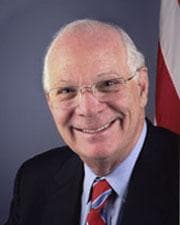
Benjamin L. Cardin
Democratic Senator
Maryland
Cosponsors (18)
Dan Sullivan (Republican)Dianne Feinstein (Democratic)Richard J. Durbin (Democratic)David Perdue (Republican)Edward J. Markey (Democratic)Jack Reed (Democratic)James E. Risch (Republican)Christopher A. Coons (Democratic)James M. Inhofe (Republican)John McCain (Republican)John Boozman (Republican)Tim Kaine (Democratic)Chris Van Hollen (Democratic)Johnny Isakson (Republican)Brian Schatz (Democratic)Robert Menendez (Democratic)Marco Rubio (Republican)Cory Gardner (Republican)
Foreign Relations Committee
- Introduced
- In Committee
- On Floor
- Passed Chamber
- Enacted
Welcomes: (1) the President of the Republic of Korea, Moon Jae-in, on his first official visit to the United States; and (2) opportunities to strengthen security consultation, cooperation, and partnership on matters such as space, cyber, and missile defense. Reaffirms the importance of: (1) the U.S.-South Korea alliance, as enshrined in the Mutual Defense Treaty of 1953; and (2) the U.S. commitment to defend South Korea under Article III of that treaty. Reinforces U.S. commitments to provide extended deterrence to South Korea. Supports efforts to: (1) strengthen such alliance and defend it against provocations by North Korea, (2) protect U.S. Armed Forces stationed on the Korean Peninsula, and (3) peacefully achieve a Korean Peninsula free of nuclear weapons through a diplomatic process. Urges the United States and South Korea to work together: (1) with members of the United Nations Security Council and other member states, to enforce existing sanctions and consider the need to pass additional new measures under Article 41 of the United Nations Charter; and (2) to implement all aspects of the U.S.-Republic of Korea Free Trade Agreement. Encourages the U.S. and South Korean governments to continue to broaden and deepen the alliance by enhancing cooperation and building new partnerships in the security, economic, energy, scientific, health, education, and cultural spheres.
View Full TextSuggested Questions
Get AI-generated questions to help you understand this bill better
Timeline
Introduced in Senate
Referred to the Committee on Foreign Relations. (text of measure as introduced: CR S3735)
International Affairs
AlliancesArms control and nonproliferationAsiaCongressional tributesDiplomacy, foreign officials, Americans abroadFree trade and trade barriersInternational organizations and cooperationMilitary assistance, sales, and agreementsMilitary operations and strategyMilitary personnel and dependentsNorth KoreaNuclear weaponsSanctionsSouth KoreaTrade agreements and negotiationsUnited Nations
A resolution welcoming the President of the Republic of Korea on his official visit to the United States and celebrating the United States-Republic of Korea relationship, and for other purposes.
USA115th CongressSRES-200| Senate
| Updated: 6/22/2017
Welcomes: (1) the President of the Republic of Korea, Moon Jae-in, on his first official visit to the United States; and (2) opportunities to strengthen security consultation, cooperation, and partnership on matters such as space, cyber, and missile defense. Reaffirms the importance of: (1) the U.S.-South Korea alliance, as enshrined in the Mutual Defense Treaty of 1953; and (2) the U.S. commitment to defend South Korea under Article III of that treaty. Reinforces U.S. commitments to provide extended deterrence to South Korea. Supports efforts to: (1) strengthen such alliance and defend it against provocations by North Korea, (2) protect U.S. Armed Forces stationed on the Korean Peninsula, and (3) peacefully achieve a Korean Peninsula free of nuclear weapons through a diplomatic process. Urges the United States and South Korea to work together: (1) with members of the United Nations Security Council and other member states, to enforce existing sanctions and consider the need to pass additional new measures under Article 41 of the United Nations Charter; and (2) to implement all aspects of the U.S.-Republic of Korea Free Trade Agreement. Encourages the U.S. and South Korean governments to continue to broaden and deepen the alliance by enhancing cooperation and building new partnerships in the security, economic, energy, scientific, health, education, and cultural spheres.
View Full TextSuggested Questions
Get AI-generated questions to help you understand this bill better
Timeline
Introduced in Senate
Referred to the Committee on Foreign Relations. (text of measure as introduced: CR S3735)
Benjamin L. Cardin
Democratic Senator
Maryland
Cosponsors (18)
Dan Sullivan (Republican)Dianne Feinstein (Democratic)Richard J. Durbin (Democratic)David Perdue (Republican)Edward J. Markey (Democratic)Jack Reed (Democratic)James E. Risch (Republican)Christopher A. Coons (Democratic)James M. Inhofe (Republican)John McCain (Republican)John Boozman (Republican)Tim Kaine (Democratic)Chris Van Hollen (Democratic)Johnny Isakson (Republican)Brian Schatz (Democratic)Robert Menendez (Democratic)Marco Rubio (Republican)Cory Gardner (Republican)
Foreign Relations Committee
International Affairs
- Introduced
- In Committee
- On Floor
- Passed Chamber
- Enacted
AlliancesArms control and nonproliferationAsiaCongressional tributesDiplomacy, foreign officials, Americans abroadFree trade and trade barriersInternational organizations and cooperationMilitary assistance, sales, and agreementsMilitary operations and strategyMilitary personnel and dependentsNorth KoreaNuclear weaponsSanctionsSouth KoreaTrade agreements and negotiationsUnited Nations