Abolish Human Trafficking Act of 2017
USA115th CongressS-1311| Senate
| Updated: 12/21/2018
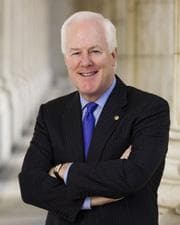
John Cornyn
Republican Senator
Texas
Cosponsors (31)
Dean Heller (Republican)Mazie K. Hirono (Democratic)Dianne Feinstein (Democratic)Catherine Cortez Masto (Democratic)Patrick J. Leahy (Democratic)Thomas Tillis (Republican)Richard J. Durbin (Democratic)Kirsten E. Gillibrand (Democratic)Christopher A. Coons (Democratic)Orrin G. Hatch (Republican)Amy Klobuchar (Democratic)Heidi Heitkamp (Democratic)James M. Inhofe (Republican)Roger F. Wicker (Republican)John Boozman (Republican)Roy Blunt (Republican)John Thune (Republican)Ted Cruz (Republican)James Lankford (Republican)Bob Corker (Republican)John Kennedy (Republican)Claire McCaskill (Democratic)Sherrod Brown (Democratic)Al Franken (Democratic)Chuck Grassley (Republican)Marco Rubio (Republican)Ron Wyden (Democratic)Richard Blumenthal (Democratic)Mike Crapo (Republican)Richard Burr (Republican)Shelley Moore Capito (Republican)
Committees (9)
• Homeland Security Committee• Foreign Affairs Committee• Crime and Federal Government Surveillance Subcommittee• Judiciary Committee• Border Security and Enforcement Subcommittee• Health Subcommittee• Judiciary Committee• Energy and Commerce Committee• Immigration Integrity, Security, and Enforcement Subcommittee
- Introduced
- In Committee
- On Floor
- Passed Chamber
- Enacted
Abolish Human Trafficking Act of 2017 (Sec. 2) This bill expresses the sense of Congress that the Domestic Trafficking Victims' Fund is intended to supplement—not supplant—any other funding for domestic trafficking victims and has achieved that objective. It reauthorizes the Domestic Trafficking Victims' Fund through FY2023. The bill reauthorizes through FY2021 the requirement for federal courts to impose an additional assessment on a non-indigent person or entity convicted of a specified offense related to human trafficking, sexual abuse or exploitation, or smuggling. (Sec. 3) It requires a court to order mandatory restitution, in addition to other criminal or civil penalties, for an offense involving transportation for illegal sexual activity. (Sec. 4) The Department of Justice (DOJ) Assets Forfeiture Fund may be used for payments of awards for information or assistance related to sexual exploitation offenses. The Department of the Treasury Assets Forfeiture Fund may be used to purchase evidence or information related to offenses human trafficking, sexual abuse, sexual exploitation, or transportation for prostitution or illegal sexual activity. (Sec. 5) The Department of Homeland Security (DHS) must issue a directive to law enforcement officials and task force members who investigate human trafficking offenses. The directive must provide instructions on how to investigate individuals who solicit human trafficking victims and how to limit arrests or prosecutions of trafficking victims for crimes committed as a direct result of their victimization. Additionally, DHS must establish a victim screening protocol for use during anti-trafficking law enforcement operations. (Sec. 6) This section authorizes DOJ's Office of Juvenile Justice and Delinquency Prevention to make grants to provide direct services to minor victims of severe forms of trafficking. (Sec. 7) Human trafficking training programs for law enforcement officers and prosecutors must do the following: emphasize that a commercial sex act with a minor constitutes a human trafficking offense, and develop curricula for investigating, arresting, and prosecuting individuals who engage in a commercial sex act or profit from human trafficking. (Sec. 8) DOJ must issue guidance that does the following: emphasizes that a commercial sex act with a minor constitutes a human trafficking offense; implements best practices for collecting additional assessments for offenses related to human trafficking, sexual abuse or exploitation, or smuggling; and clarifies that commercial sex exploitation is a form of gender-based violence. (Sec. 9) The National Strategy for Combatting Human Trafficking must include a national strategy to prevent human trafficking and reduce demand for human trafficking victims. (Sec. 10) This bill revises an existing grant program to authorize grants for additional purposes—to improve services for trafficking survivors and to improve partnerships between victim service providers and law enforcement agencies and other entities. (Sec. 11) This section increases the maximum prison terms for certain offenses related to peonage, slavery, involuntary servitude, forced labor, and trafficking. (Sec. 12) This section imposes an enhanced 10-year prison term on a member of a street gang who commits (or conspires to commit) an offense involving human trafficking, sexual abuse, sexual exploitation, or transportation for prostitution or illegal sexual activity. (Sec. 13) This bill expands DOJ's authority to intercept wire, oral, or electronic communications in investigations of offenses related to peonage, slavery, and trafficking in persons. (Sec. 14) The bill revises the specific intent element for certain offenses involving interstate or foreign travel to engage in or facilitate illicit sexual conduct. Specifically, the government must prove that engaging in illicit sexual conduct was a motivating purpose (currently, a purpose) of the interstate or foreign travel. (Sec. 15) This section directs the Department of Justice to designate at least one Human Trafficking Coordinator in each federal judicial district to implement the National Strategy for Combatting Human Trafficking and to prosecute cases, conduct outreach, and enforce relevant laws; and a National Human Trafficking Coordinator within DOJ to coordinate, promote, and support DOJ's work related to human trafficking. (Sec. 16) DOJ must include, in its annual human trafficking report, data on the number of convictions for human trafficking offenses. (Sec. 17) The Federal Bureau of Investigation must revise the Uniform Crime Reports and the National Incident-Based Reporting System to make additional distinctions in its data on reports of human trafficking offenses. Currently, it distinguishes between reports of incidents of prostitution, assisting or promoting prostitution, and purchasing prostitution. Now it must also include distinctions for incidents of assisting or promoting prostitution of a minor and purchasing prostitution of a minor. (Sec. 18) The Interagency Task Force to Monitor and Combat Trafficking must report annually on the number of referrals from the national human trafficking hotline by federal departments and agencies. Additionally, the national human trafficking hotline number must be posted in a visible place in all federal buildings. (Sec. 19) This section prohibits the use of federal funds for any program that funds or supports an organization that provides adult entertainment and profits from the commercial sex trade. (Sec. 20) The bill directs the National Institute of Justice and the Centers for Disease Control and Prevention to jointly study the physical and psychological effects of severe forms of trafficking in persons. (Sec. 21) It reauthorizes for FY2018-FY2021 grants (1) for victims services providers and (2) for investigating severe forms of trafficking in persons. (Sec. 22) It subjects grants authorized in this bill to various accountability measures. (Sec. 23) This section provides statutory authority for the Human Exploitation Rescue Operation (HERO) Child-Rescue Corps Program within the Cyber Crimes Center of U.S. Immigration and Customs Enforcement. The HERO Child-Rescue Corps Program, operated in partnership with the Department of Defense and the National Association to Protect Children, must recruit, train, equip, and employ wounded, ill, and injured veterans and other members of the military to combat and prevent child exploitation.
Suggested Questions
Get AI-generated questions to help you understand this bill better
Timeline
Introduced in Senate
Read twice and referred to the Committee on the Judiciary. (text of measure as introduced: CR S3331-3335)
Committee on the Judiciary. Ordered to be reported with an amendment in the nature of a substitute favorably.
Committee on the Judiciary. Reported by Senator Grassley with an amendment in the nature of a substitute. Without written report.
Placed on Senate Legislative Calendar under General Orders. Calendar No. 188.
Passed Senate with an amendment by Unanimous Consent. (text: CR S5175-5179)
Passed/agreed to in Senate: Passed Senate with an amendment by Unanimous Consent.(text: CR S5175-5179)
The committee substitute as amended agreed to by Unanimous Consent.
Measure laid before Senate by unanimous consent. (consideration: CR S5170-5179)
Referred to the Committee on the Judiciary, and in addition to the Committees on Foreign Affairs, Energy and Commerce, and Homeland Security, for a period to be subsequently determined by the Speaker, in each case for consideration of such provisions as fall within the jurisdiction of the committee concerned.
Message on Senate action sent to the House.
Received in the House.
Referred to the Subcommittee on Border and Maritime Security.
Referred to the Subcommittee on Health.
Referred to the Subcommittee on Crime, Terrorism, Homeland Security, and Investigations.
Referred to the Subcommittee on Immigration and Border Security.
Committee on Homeland Security discharged.
Committee on the Judiciary discharged.
Committee on Foreign Affairs discharged.
Committee on Energy and Commerce discharged.
Mr. Marino asked unanimous consent to discharge from committee and consider.
Considered by unanimous consent. (consideration: CR H9373-9381; text of measure as introduced: CR H9373-9377)
Passed/agreed to in House: On passage Passed without objection.
On passage Passed without objection.
Motion to reconsider laid on the table Agreed to without objection.
Message on House action received in Senate and at desk: House amendment to Senate bill.
Senate agreed to House amendment to S. 1311 by Unanimous Consent. (consideration: CR S7628; text: CR S7628)
Resolving differences -- Senate actions: Senate agreed to House amendment to S. 1311 by Unanimous Consent.(consideration: CR S7628; text: CR S7628)
Message on Senate action sent to the House.
Presented to President.
Signed by President.
Became Public Law No: 115-392.
Crime and Law Enforcement
Accounting and auditingAdvisory bodiesAppropriationsChild safety and welfareCivil actions and liabilityCongressional oversightCrime preventionCrimes against childrenCrime victimsCriminal investigation, prosecution, interrogationCriminal justice information and recordsCriminal procedure and sentencingDebt collectionDepartment of Homeland SecurityDepartment of JusticeDomestic violence and child abuseEvidence and witnessesExecutive agency funding and structureFederal officialsGovernment buildings, facilities, and propertyGovernment information and archivesGovernment studies and investigationsGovernment trust fundsHealth information and medical recordsHealth personnelHealth programs administration and fundingHuman traffickingLaw enforcement administration and fundingLaw enforcement officersMedical educationMedical researchMental healthOrganized crimeSex offensesSocial work, volunteer service, charitable organizationsTax administration and collection, taxpayersTax-exempt organizationsTravel and tourismYouth employment and child labor
Abolish Human Trafficking Act of 2017
USA115th CongressS-1311| Senate
| Updated: 12/21/2018
Abolish Human Trafficking Act of 2017 (Sec. 2) This bill expresses the sense of Congress that the Domestic Trafficking Victims' Fund is intended to supplement—not supplant—any other funding for domestic trafficking victims and has achieved that objective. It reauthorizes the Domestic Trafficking Victims' Fund through FY2023. The bill reauthorizes through FY2021 the requirement for federal courts to impose an additional assessment on a non-indigent person or entity convicted of a specified offense related to human trafficking, sexual abuse or exploitation, or smuggling. (Sec. 3) It requires a court to order mandatory restitution, in addition to other criminal or civil penalties, for an offense involving transportation for illegal sexual activity. (Sec. 4) The Department of Justice (DOJ) Assets Forfeiture Fund may be used for payments of awards for information or assistance related to sexual exploitation offenses. The Department of the Treasury Assets Forfeiture Fund may be used to purchase evidence or information related to offenses human trafficking, sexual abuse, sexual exploitation, or transportation for prostitution or illegal sexual activity. (Sec. 5) The Department of Homeland Security (DHS) must issue a directive to law enforcement officials and task force members who investigate human trafficking offenses. The directive must provide instructions on how to investigate individuals who solicit human trafficking victims and how to limit arrests or prosecutions of trafficking victims for crimes committed as a direct result of their victimization. Additionally, DHS must establish a victim screening protocol for use during anti-trafficking law enforcement operations. (Sec. 6) This section authorizes DOJ's Office of Juvenile Justice and Delinquency Prevention to make grants to provide direct services to minor victims of severe forms of trafficking. (Sec. 7) Human trafficking training programs for law enforcement officers and prosecutors must do the following: emphasize that a commercial sex act with a minor constitutes a human trafficking offense, and develop curricula for investigating, arresting, and prosecuting individuals who engage in a commercial sex act or profit from human trafficking. (Sec. 8) DOJ must issue guidance that does the following: emphasizes that a commercial sex act with a minor constitutes a human trafficking offense; implements best practices for collecting additional assessments for offenses related to human trafficking, sexual abuse or exploitation, or smuggling; and clarifies that commercial sex exploitation is a form of gender-based violence. (Sec. 9) The National Strategy for Combatting Human Trafficking must include a national strategy to prevent human trafficking and reduce demand for human trafficking victims. (Sec. 10) This bill revises an existing grant program to authorize grants for additional purposes—to improve services for trafficking survivors and to improve partnerships between victim service providers and law enforcement agencies and other entities. (Sec. 11) This section increases the maximum prison terms for certain offenses related to peonage, slavery, involuntary servitude, forced labor, and trafficking. (Sec. 12) This section imposes an enhanced 10-year prison term on a member of a street gang who commits (or conspires to commit) an offense involving human trafficking, sexual abuse, sexual exploitation, or transportation for prostitution or illegal sexual activity. (Sec. 13) This bill expands DOJ's authority to intercept wire, oral, or electronic communications in investigations of offenses related to peonage, slavery, and trafficking in persons. (Sec. 14) The bill revises the specific intent element for certain offenses involving interstate or foreign travel to engage in or facilitate illicit sexual conduct. Specifically, the government must prove that engaging in illicit sexual conduct was a motivating purpose (currently, a purpose) of the interstate or foreign travel. (Sec. 15) This section directs the Department of Justice to designate at least one Human Trafficking Coordinator in each federal judicial district to implement the National Strategy for Combatting Human Trafficking and to prosecute cases, conduct outreach, and enforce relevant laws; and a National Human Trafficking Coordinator within DOJ to coordinate, promote, and support DOJ's work related to human trafficking. (Sec. 16) DOJ must include, in its annual human trafficking report, data on the number of convictions for human trafficking offenses. (Sec. 17) The Federal Bureau of Investigation must revise the Uniform Crime Reports and the National Incident-Based Reporting System to make additional distinctions in its data on reports of human trafficking offenses. Currently, it distinguishes between reports of incidents of prostitution, assisting or promoting prostitution, and purchasing prostitution. Now it must also include distinctions for incidents of assisting or promoting prostitution of a minor and purchasing prostitution of a minor. (Sec. 18) The Interagency Task Force to Monitor and Combat Trafficking must report annually on the number of referrals from the national human trafficking hotline by federal departments and agencies. Additionally, the national human trafficking hotline number must be posted in a visible place in all federal buildings. (Sec. 19) This section prohibits the use of federal funds for any program that funds or supports an organization that provides adult entertainment and profits from the commercial sex trade. (Sec. 20) The bill directs the National Institute of Justice and the Centers for Disease Control and Prevention to jointly study the physical and psychological effects of severe forms of trafficking in persons. (Sec. 21) It reauthorizes for FY2018-FY2021 grants (1) for victims services providers and (2) for investigating severe forms of trafficking in persons. (Sec. 22) It subjects grants authorized in this bill to various accountability measures. (Sec. 23) This section provides statutory authority for the Human Exploitation Rescue Operation (HERO) Child-Rescue Corps Program within the Cyber Crimes Center of U.S. Immigration and Customs Enforcement. The HERO Child-Rescue Corps Program, operated in partnership with the Department of Defense and the National Association to Protect Children, must recruit, train, equip, and employ wounded, ill, and injured veterans and other members of the military to combat and prevent child exploitation.
Suggested Questions
Get AI-generated questions to help you understand this bill better
Timeline
Introduced in Senate
Read twice and referred to the Committee on the Judiciary. (text of measure as introduced: CR S3331-3335)
Committee on the Judiciary. Ordered to be reported with an amendment in the nature of a substitute favorably.
Committee on the Judiciary. Reported by Senator Grassley with an amendment in the nature of a substitute. Without written report.
Placed on Senate Legislative Calendar under General Orders. Calendar No. 188.
Passed Senate with an amendment by Unanimous Consent. (text: CR S5175-5179)
Passed/agreed to in Senate: Passed Senate with an amendment by Unanimous Consent.(text: CR S5175-5179)
The committee substitute as amended agreed to by Unanimous Consent.
Measure laid before Senate by unanimous consent. (consideration: CR S5170-5179)
Referred to the Committee on the Judiciary, and in addition to the Committees on Foreign Affairs, Energy and Commerce, and Homeland Security, for a period to be subsequently determined by the Speaker, in each case for consideration of such provisions as fall within the jurisdiction of the committee concerned.
Message on Senate action sent to the House.
Received in the House.
Referred to the Subcommittee on Border and Maritime Security.
Referred to the Subcommittee on Health.
Referred to the Subcommittee on Crime, Terrorism, Homeland Security, and Investigations.
Referred to the Subcommittee on Immigration and Border Security.
Committee on Homeland Security discharged.
Committee on the Judiciary discharged.
Committee on Foreign Affairs discharged.
Committee on Energy and Commerce discharged.
Mr. Marino asked unanimous consent to discharge from committee and consider.
Considered by unanimous consent. (consideration: CR H9373-9381; text of measure as introduced: CR H9373-9377)
Passed/agreed to in House: On passage Passed without objection.
On passage Passed without objection.
Motion to reconsider laid on the table Agreed to without objection.
Message on House action received in Senate and at desk: House amendment to Senate bill.
Senate agreed to House amendment to S. 1311 by Unanimous Consent. (consideration: CR S7628; text: CR S7628)
Resolving differences -- Senate actions: Senate agreed to House amendment to S. 1311 by Unanimous Consent.(consideration: CR S7628; text: CR S7628)
Message on Senate action sent to the House.
Presented to President.
Signed by President.
Became Public Law No: 115-392.
John Cornyn
Republican Senator
Texas
Cosponsors (31)
Dean Heller (Republican)Mazie K. Hirono (Democratic)Dianne Feinstein (Democratic)Catherine Cortez Masto (Democratic)Patrick J. Leahy (Democratic)Thomas Tillis (Republican)Richard J. Durbin (Democratic)Kirsten E. Gillibrand (Democratic)Christopher A. Coons (Democratic)Orrin G. Hatch (Republican)Amy Klobuchar (Democratic)Heidi Heitkamp (Democratic)James M. Inhofe (Republican)Roger F. Wicker (Republican)John Boozman (Republican)Roy Blunt (Republican)John Thune (Republican)Ted Cruz (Republican)James Lankford (Republican)Bob Corker (Republican)John Kennedy (Republican)Claire McCaskill (Democratic)Sherrod Brown (Democratic)Al Franken (Democratic)Chuck Grassley (Republican)Marco Rubio (Republican)Ron Wyden (Democratic)Richard Blumenthal (Democratic)Mike Crapo (Republican)Richard Burr (Republican)Shelley Moore Capito (Republican)
Committees (9)
• Homeland Security Committee• Foreign Affairs Committee• Crime and Federal Government Surveillance Subcommittee• Judiciary Committee• Border Security and Enforcement Subcommittee• Health Subcommittee• Judiciary Committee• Energy and Commerce Committee• Immigration Integrity, Security, and Enforcement Subcommittee
Crime and Law Enforcement
Related Bills
- HR 115-3304: To require the Attorney General to designate Human Trafficking Coordinators for Federal judicial districts, and for other purposes.
- HR 115-2803: To provide assistance in abolishing human trafficking in the United States.
- S 115-1236: A bill to require the Attorney General to designate Human Trafficking Coordinators for Federal judicial districts, and for other purposes.
- S 115-1517: A bill to enhance the Human Exploitation Rescue Operations Act of 2015, and for other purposes.
- Introduced
- In Committee
- On Floor
- Passed Chamber
- Enacted
Accounting and auditingAdvisory bodiesAppropriationsChild safety and welfareCivil actions and liabilityCongressional oversightCrime preventionCrimes against childrenCrime victimsCriminal investigation, prosecution, interrogationCriminal justice information and recordsCriminal procedure and sentencingDebt collectionDepartment of Homeland SecurityDepartment of JusticeDomestic violence and child abuseEvidence and witnessesExecutive agency funding and structureFederal officialsGovernment buildings, facilities, and propertyGovernment information and archivesGovernment studies and investigationsGovernment trust fundsHealth information and medical recordsHealth personnelHealth programs administration and fundingHuman traffickingLaw enforcement administration and fundingLaw enforcement officersMedical educationMedical researchMental healthOrganized crimeSex offensesSocial work, volunteer service, charitable organizationsTax administration and collection, taxpayersTax-exempt organizationsTravel and tourismYouth employment and child labor