To establish the Federal Smart Building Program to implement smart building technology and demonstrate the costs and benefits of smart buildings, and for other purposes.
USA115th CongressHR-5069| House
| Updated: 2/23/2018
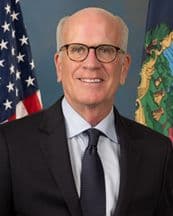
Peter Welch
Democratic Representative
Vermont
Cosponsors (1)
Transportation and Infrastructure Committee, Energy Subcommittee, Economic Development, Public Buildings, and Emergency Management Subcommittee, Science, Space, and Technology Committee, Energy and Commerce Committee
- Introduced
- In Committee
- On Floor
- Passed Chamber
- Enacted
Smart Building Acceleration Act of 2018 This bill requires the Department of Energy (DOE) to establish a Federal Smart Building Program to implement smart building technology in certain federal buildings and demonstrate the costs and benefits of smart buildings. Smart buildings are buildings with energy systems that: (1) are flexible and automated; (2) have extensive operational monitoring and communication connectivity, allowing remote monitoring and analysis of building functions; (3) take a systems-based approach in integrating the overall building operations for control of energy generation, consumption, and storage; (4) communicate with utilities and other third-party commercial entities, if appropriate; (5) protect the health and safety of occupants and workers; and (6) are cybersecure. DOE may expand awards made under the Federal Energy Management Program and the Better Building Challenge to recognize specific federal agency achievements in accelerating the adoption of smart building technologies. DOE must conduct a survey of privately owned smart buildings throughout the United States and evaluate their costs and benefits. As part of the Better Building Challenge, DOE must demonstrate policies and approaches that accelerate the transition to smart buildings. DOE must conduct research and development on barriers to the integration of advanced building technologies.
View Full TextSuggested Questions
Get AI-generated questions to help you understand this bill better
Timeline
Introduced in House
Referred to the Committee on Energy and Commerce, and in addition to the Committees on Transportation and Infrastructure, and Science, Space, and Technology, for a period to be subsequently determined by the Speaker, in each case for consideration of such provisions as fall within the jurisdiction of the committee concerned.
Referred to the Subcommittee on Economic Development, Public Buildings and Emergency Management.
Referred to the Subcommittee on Energy.
Energy
Building constructionComputer security and identity theftCongressional oversightEnergy efficiency and conservationEnergy storage, supplies, demandGovernment buildings, facilities, and propertyGovernment studies and investigationsInternet and video servicesInternet, web applications, social mediaPublic contracts and procurementPublic utilities and utility ratesResearch and developmentWater qualityWater use and supplyWorker safety and health
To establish the Federal Smart Building Program to implement smart building technology and demonstrate the costs and benefits of smart buildings, and for other purposes.
USA115th CongressHR-5069| House
| Updated: 2/23/2018
Smart Building Acceleration Act of 2018 This bill requires the Department of Energy (DOE) to establish a Federal Smart Building Program to implement smart building technology in certain federal buildings and demonstrate the costs and benefits of smart buildings. Smart buildings are buildings with energy systems that: (1) are flexible and automated; (2) have extensive operational monitoring and communication connectivity, allowing remote monitoring and analysis of building functions; (3) take a systems-based approach in integrating the overall building operations for control of energy generation, consumption, and storage; (4) communicate with utilities and other third-party commercial entities, if appropriate; (5) protect the health and safety of occupants and workers; and (6) are cybersecure. DOE may expand awards made under the Federal Energy Management Program and the Better Building Challenge to recognize specific federal agency achievements in accelerating the adoption of smart building technologies. DOE must conduct a survey of privately owned smart buildings throughout the United States and evaluate their costs and benefits. As part of the Better Building Challenge, DOE must demonstrate policies and approaches that accelerate the transition to smart buildings. DOE must conduct research and development on barriers to the integration of advanced building technologies.
View Full TextSuggested Questions
Get AI-generated questions to help you understand this bill better
Timeline
Introduced in House
Referred to the Committee on Energy and Commerce, and in addition to the Committees on Transportation and Infrastructure, and Science, Space, and Technology, for a period to be subsequently determined by the Speaker, in each case for consideration of such provisions as fall within the jurisdiction of the committee concerned.
Referred to the Subcommittee on Economic Development, Public Buildings and Emergency Management.
Referred to the Subcommittee on Energy.
Peter Welch
Democratic Representative
Vermont
Cosponsors (1)
Transportation and Infrastructure Committee, Energy Subcommittee, Economic Development, Public Buildings, and Emergency Management Subcommittee, Science, Space, and Technology Committee, Energy and Commerce Committee
Energy
Related Bills
- Introduced
- In Committee
- On Floor
- Passed Chamber
- Enacted
Building constructionComputer security and identity theftCongressional oversightEnergy efficiency and conservationEnergy storage, supplies, demandGovernment buildings, facilities, and propertyGovernment studies and investigationsInternet and video servicesInternet, web applications, social mediaPublic contracts and procurementPublic utilities and utility ratesResearch and developmentWater qualityWater use and supplyWorker safety and health