To address financial conflicts of interest of the President and Vice President.
USA115th CongressHR-371| House
| Updated: 2/6/2017
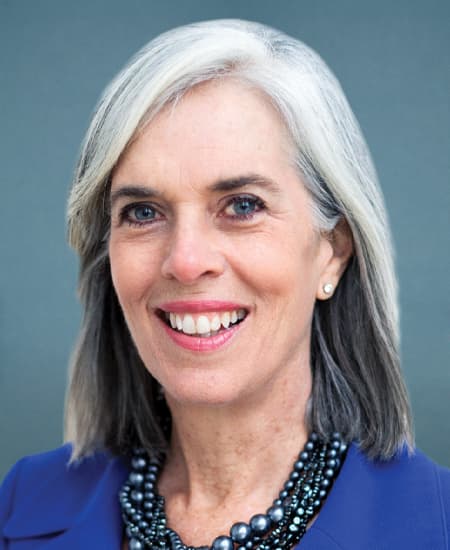
Katherine M. Clark
Democratic Representative
Massachusetts
Cosponsors (155)
Brenda L. Lawrence (Democratic)Dwight Evans (Democratic)Stacey E. Plaskett (Democratic)Donald Norcross (Democratic)David Loebsack (Democratic)Tim Ryan (Democratic)Val Butler Demings (Democratic)Marcy Kaptur (Democratic)John Garamendi (Democratic)Richard M. Nolan (Democratic)Ruben Gallego (Democratic)Jared Huffman (Democratic)Robert C. "Bobby" Scott (Democratic)Adam B. Schiff (Democratic)Barbara Lee (Democratic)Nita M. Lowey (Democratic)Robin L. Kelly (Democratic)Joseph P. Kennedy (Democratic)Raúl M. Grijalva (Democratic)Mark Pocan (Democratic)Karen Bass (Democratic)James R. Langevin (Democratic)Joyce Beatty (Democratic)David N. Cicilline (Democratic)Jackie Speier (Democratic)Kathleen M. Rice (Democratic)Darren Soto (Democratic)Sheila Jackson Lee (Democratic)Derek Kilmer (Democratic)John A. Yarmuth (Democratic)Ben Ray Luján (Democratic)Carolyn B. Maloney (Democratic)Bill Foster (Democratic)Joe Courtney (Democratic)Sanford D. Bishop (Democratic)C. A. Dutch Ruppersberger (Democratic)Pete Aguilar (Democratic)Eliot L. Engel (Democratic)Juan Vargas (Democratic)Terri A. Sewell (Democratic)Bobby L. Rush (Democratic)Jimmy Panetta (Democratic)Carol Shea-Porter (Democratic)Eric Swalwell (Democratic)Dina Titus (Democratic)Michael F. Doyle (Democratic)Niki Tsongas (Democratic)Debbie Dingell (Democratic)Steve Cohen (Democratic)Tony Cárdenas (Democratic)Susan A. Davis (Democratic)Scott H. Peters (Democratic)Paul Tonko (Democratic)Donald M. Payne (Democratic)John P. Sarbanes (Democratic)Wm. Lacy Clay (Democratic)Rosa L. DeLauro (Democratic)Michael E. Capuano (Democratic)Adriano Espaillat (Democratic)Danny K. Davis (Democratic)Lucille Roybal-Allard (Democratic)Peter A. DeFazio (Democratic)Daniel T. Kildee (Democratic)Ted Lieu (Democratic)Michelle Lujan Grisham (Democratic)Ro Khanna (Democratic)A. Donald McEachin (Democratic)Elizabeth H. Esty (Democratic)Alan S. Lowenthal (Democratic)Ann M. Kuster (Democratic)Kurt Schrader (Democratic)Henry C. "Hank" Johnson (Democratic)Al Green (Democratic)André Carson (Democratic)Brendan F. Boyle (Democratic)Matt Cartwright (Democratic)John B. Larson (Democratic)Stephen F. Lynch (Democratic)Mark DeSaulnier (Democratic)Keith Ellison (Democratic)Jim Cooper (Democratic)John Conyers (Democratic)Timothy J. Walz (Democratic)Doris O. Matsui (Democratic)Gregory W. Meeks (Democratic)David E. Price (Democratic)Hakeem S. Jeffries (Democratic)Raja Krishnamoorthi (Democratic)James A. Himes (Democratic)Jerrold Nadler (Democratic)Theodore E. Deutch (Democratic)Sander M. Levin (Democratic)John Lewis (Democratic)Alma S. Adams (Democratic)Anna G. Eshoo (Democratic)Ami Bera (Democratic)Mark Takano (Democratic)Luis V. Gutierrez (Democratic)Pramila Jayapal (Democratic)Kathy Castor (Democratic)Betty McCollum (Democratic)Eleanor Holmes Norton (Democratic)Brad Sherman (Democratic)Bonnie Watson Coleman (Democratic)Denny Heck (Democratic)Richard E. Neal (Democratic)Tulsi Gabbard (Democratic)Salud O. Carbajal (Democratic)Jamie Raskin (Democratic)Ruben J. Kihuen (Democratic)Elijah E. Cummings (Democratic)Jim Costa (Democratic)Mike Quigley (Democratic)Lois Frankel (Democratic)Donald S. Beyer (Democratic)Louise McIntosh Slaughter (Democratic)Janice D. Schakowsky (Democratic)James P. McGovern (Democratic)Adam Smith (Democratic)Ron Kind (Democratic)Nydia M. Velázquez (Democratic)Julia Brownley (Democratic)Joseph Crowley (Democratic)William R. Keating (Democratic)Eddie Bernice Johnson (Democratic)Beto O'Rourke (Democratic)Yvette D. Clarke (Democratic)Rick Larsen (Democratic)Jose E. Serrano (Democratic)Jared Polis (Democratic)Peter Welch (Democratic)Albio Sires (Democratic)Bennie G. Thompson (Democratic)Earl Blumenauer (Democratic)Charlie Crist (Democratic)Seth Moulton (Democratic)Mike Thompson (Democratic)Suzanne Bonamici (Democratic)Linda T. Sánchez (Democratic)Ed Perlmutter (Democratic)Zoe Lofgren (Democratic)Nanette Diaz Barragán (Democratic)Frank Pallone (Democratic)Gwen Moore (Democratic)Grace Meng (Democratic)Cheri Bustos (Democratic)Bradley Scott Schneider (Democratic)Alcee L. Hastings (Democratic)Lloyd Doggett (Democratic)Gerald E. Connolly (Democratic)Chellie Pingree (Democratic)Bill Pascrell (Democratic)Colleen Hanabusa (Democratic)Grace F. Napolitano (Democratic)Judy Chu (Democratic)
Ways and Means Committee, Judiciary Committee, Constitution and Limited Government Subcommittee, Oversight and Government Reform Committee
- Introduced
- In Committee
- On Floor
- Passed Chamber
- Enacted
Presidential Conflicts of Interest Act of 2017 This bill requires the President and Vice President to submit to Congress and the Office of Government Ethics a disclosure of financial interests. Among the contents of such disclosure, the President and Vice President shall: (1) include a detailed description of each financial interest of the President and Vice President, the spouse of the President and Vice President, or a minor child of the President and Vice President; and (2) include the tax returns filed by or on behalf of the President and Vice President for the three most recent taxable years. The President, the Vice President, the spouse of the President or Vice President, and any minor child of the President or Vice President must divest any financial interest posing a potential conflict of interest by transferring such interest to a qualified blind trust. Within a reasonable period of time after such financial interest is transferred to a qualified blind trust, the trustee of such trust shall: (1) sell the financial interest; and (2) use the proceeds from the sale of the financial interest to purchase conflict-free holdings. The Office of Government Ethics shall submit to Congress, the President, and the Vice President an annual report regarding the financial interests of such officials, their spouses, and any of their minor children. The Attorney General, the attorney general of any state, or any person aggrieved by a violation of divestiture requirements posing a potential conflict of interest may seek declaratory or injunctive relief if: (1) the Office of Government Ethics is unable to issue a report indicating whether the President or Vice President is in substantial compliance with such divestiture requirements; or (2) there is probable cause to believe the President or the Vice President has not complied with such requirements. The bill amends the federal criminal code to require the recusal of presidential appointees from decisions affecting the financial holdings of a President or the spouse of a President. Prohibitions pertaining to contracts entered into by Members of Congress are extended to contracts by the President or Vice President. The bill amends the Ethics in Government Act of 1978 to require the disclosure of tax returns by the incumbent President and presidential nominees of a major political party for the three most recent taxable years. The bill declares the sense of Congress that a violation of the divestiture requirements of this bill or the Ethics in Government in Government Act of 1978 by the President or the Vice President would constitute a high crime or misdemeanor.
View Full TextSuggested Questions
Get AI-generated questions to help you understand this bill better
Timeline
Introduced in House
Referred to the Committee on Oversight and Government Reform, and in addition to the Committees on Ways and Means, and the Judiciary, for a period to be subsequently determined by the Speaker, in each case for consideration of such provisions as fall within the jurisdiction of the committee concerned.
Referred to the Subcommittee on the Constitution and Civil Justice.
Government Operations and Politics
Civil actions and liabilityCongressional oversightCorporate finance and managementElections, voting, political campaign regulationFederal officialsFinancial services and investmentsGovernment employee pay, benefits, personnel managementGovernment ethics and transparency, public corruptionGovernment information and archivesGovernment studies and investigationsPresidents and presidential powers, Vice PresidentsPublic contracts and procurementTax administration and collection, taxpayers
To address financial conflicts of interest of the President and Vice President.
USA115th CongressHR-371| House
| Updated: 2/6/2017
Presidential Conflicts of Interest Act of 2017 This bill requires the President and Vice President to submit to Congress and the Office of Government Ethics a disclosure of financial interests. Among the contents of such disclosure, the President and Vice President shall: (1) include a detailed description of each financial interest of the President and Vice President, the spouse of the President and Vice President, or a minor child of the President and Vice President; and (2) include the tax returns filed by or on behalf of the President and Vice President for the three most recent taxable years. The President, the Vice President, the spouse of the President or Vice President, and any minor child of the President or Vice President must divest any financial interest posing a potential conflict of interest by transferring such interest to a qualified blind trust. Within a reasonable period of time after such financial interest is transferred to a qualified blind trust, the trustee of such trust shall: (1) sell the financial interest; and (2) use the proceeds from the sale of the financial interest to purchase conflict-free holdings. The Office of Government Ethics shall submit to Congress, the President, and the Vice President an annual report regarding the financial interests of such officials, their spouses, and any of their minor children. The Attorney General, the attorney general of any state, or any person aggrieved by a violation of divestiture requirements posing a potential conflict of interest may seek declaratory or injunctive relief if: (1) the Office of Government Ethics is unable to issue a report indicating whether the President or Vice President is in substantial compliance with such divestiture requirements; or (2) there is probable cause to believe the President or the Vice President has not complied with such requirements. The bill amends the federal criminal code to require the recusal of presidential appointees from decisions affecting the financial holdings of a President or the spouse of a President. Prohibitions pertaining to contracts entered into by Members of Congress are extended to contracts by the President or Vice President. The bill amends the Ethics in Government Act of 1978 to require the disclosure of tax returns by the incumbent President and presidential nominees of a major political party for the three most recent taxable years. The bill declares the sense of Congress that a violation of the divestiture requirements of this bill or the Ethics in Government in Government Act of 1978 by the President or the Vice President would constitute a high crime or misdemeanor.
View Full TextSuggested Questions
Get AI-generated questions to help you understand this bill better
Timeline
Introduced in House
Referred to the Committee on Oversight and Government Reform, and in addition to the Committees on Ways and Means, and the Judiciary, for a period to be subsequently determined by the Speaker, in each case for consideration of such provisions as fall within the jurisdiction of the committee concerned.
Referred to the Subcommittee on the Constitution and Civil Justice.
Katherine M. Clark
Democratic Representative
Massachusetts
Cosponsors (155)
Brenda L. Lawrence (Democratic)Dwight Evans (Democratic)Stacey E. Plaskett (Democratic)Donald Norcross (Democratic)David Loebsack (Democratic)Tim Ryan (Democratic)Val Butler Demings (Democratic)Marcy Kaptur (Democratic)John Garamendi (Democratic)Richard M. Nolan (Democratic)Ruben Gallego (Democratic)Jared Huffman (Democratic)Robert C. "Bobby" Scott (Democratic)Adam B. Schiff (Democratic)Barbara Lee (Democratic)Nita M. Lowey (Democratic)Robin L. Kelly (Democratic)Joseph P. Kennedy (Democratic)Raúl M. Grijalva (Democratic)Mark Pocan (Democratic)Karen Bass (Democratic)James R. Langevin (Democratic)Joyce Beatty (Democratic)David N. Cicilline (Democratic)Jackie Speier (Democratic)Kathleen M. Rice (Democratic)Darren Soto (Democratic)Sheila Jackson Lee (Democratic)Derek Kilmer (Democratic)John A. Yarmuth (Democratic)Ben Ray Luján (Democratic)Carolyn B. Maloney (Democratic)Bill Foster (Democratic)Joe Courtney (Democratic)Sanford D. Bishop (Democratic)C. A. Dutch Ruppersberger (Democratic)Pete Aguilar (Democratic)Eliot L. Engel (Democratic)Juan Vargas (Democratic)Terri A. Sewell (Democratic)Bobby L. Rush (Democratic)Jimmy Panetta (Democratic)Carol Shea-Porter (Democratic)Eric Swalwell (Democratic)Dina Titus (Democratic)Michael F. Doyle (Democratic)Niki Tsongas (Democratic)Debbie Dingell (Democratic)Steve Cohen (Democratic)Tony Cárdenas (Democratic)Susan A. Davis (Democratic)Scott H. Peters (Democratic)Paul Tonko (Democratic)Donald M. Payne (Democratic)John P. Sarbanes (Democratic)Wm. Lacy Clay (Democratic)Rosa L. DeLauro (Democratic)Michael E. Capuano (Democratic)Adriano Espaillat (Democratic)Danny K. Davis (Democratic)Lucille Roybal-Allard (Democratic)Peter A. DeFazio (Democratic)Daniel T. Kildee (Democratic)Ted Lieu (Democratic)Michelle Lujan Grisham (Democratic)Ro Khanna (Democratic)A. Donald McEachin (Democratic)Elizabeth H. Esty (Democratic)Alan S. Lowenthal (Democratic)Ann M. Kuster (Democratic)Kurt Schrader (Democratic)Henry C. "Hank" Johnson (Democratic)Al Green (Democratic)André Carson (Democratic)Brendan F. Boyle (Democratic)Matt Cartwright (Democratic)John B. Larson (Democratic)Stephen F. Lynch (Democratic)Mark DeSaulnier (Democratic)Keith Ellison (Democratic)Jim Cooper (Democratic)John Conyers (Democratic)Timothy J. Walz (Democratic)Doris O. Matsui (Democratic)Gregory W. Meeks (Democratic)David E. Price (Democratic)Hakeem S. Jeffries (Democratic)Raja Krishnamoorthi (Democratic)James A. Himes (Democratic)Jerrold Nadler (Democratic)Theodore E. Deutch (Democratic)Sander M. Levin (Democratic)John Lewis (Democratic)Alma S. Adams (Democratic)Anna G. Eshoo (Democratic)Ami Bera (Democratic)Mark Takano (Democratic)Luis V. Gutierrez (Democratic)Pramila Jayapal (Democratic)Kathy Castor (Democratic)Betty McCollum (Democratic)Eleanor Holmes Norton (Democratic)Brad Sherman (Democratic)Bonnie Watson Coleman (Democratic)Denny Heck (Democratic)Richard E. Neal (Democratic)Tulsi Gabbard (Democratic)Salud O. Carbajal (Democratic)Jamie Raskin (Democratic)Ruben J. Kihuen (Democratic)Elijah E. Cummings (Democratic)Jim Costa (Democratic)Mike Quigley (Democratic)Lois Frankel (Democratic)Donald S. Beyer (Democratic)Louise McIntosh Slaughter (Democratic)Janice D. Schakowsky (Democratic)James P. McGovern (Democratic)Adam Smith (Democratic)Ron Kind (Democratic)Nydia M. Velázquez (Democratic)Julia Brownley (Democratic)Joseph Crowley (Democratic)William R. Keating (Democratic)Eddie Bernice Johnson (Democratic)Beto O'Rourke (Democratic)Yvette D. Clarke (Democratic)Rick Larsen (Democratic)Jose E. Serrano (Democratic)Jared Polis (Democratic)Peter Welch (Democratic)Albio Sires (Democratic)Bennie G. Thompson (Democratic)Earl Blumenauer (Democratic)Charlie Crist (Democratic)Seth Moulton (Democratic)Mike Thompson (Democratic)Suzanne Bonamici (Democratic)Linda T. Sánchez (Democratic)Ed Perlmutter (Democratic)Zoe Lofgren (Democratic)Nanette Diaz Barragán (Democratic)Frank Pallone (Democratic)Gwen Moore (Democratic)Grace Meng (Democratic)Cheri Bustos (Democratic)Bradley Scott Schneider (Democratic)Alcee L. Hastings (Democratic)Lloyd Doggett (Democratic)Gerald E. Connolly (Democratic)Chellie Pingree (Democratic)Bill Pascrell (Democratic)Colleen Hanabusa (Democratic)Grace F. Napolitano (Democratic)Judy Chu (Democratic)
Ways and Means Committee, Judiciary Committee, Constitution and Limited Government Subcommittee, Oversight and Government Reform Committee
Government Operations and Politics
Related Bills
- S 115-65: A bill to address financial conflicts of interest of the President and Vice President.
- S 115-3357: A bill to improve the anti-corruption and public integrity laws, and for other purposes.
- S 115-26: A bill to amend the Ethics in Government Act of 1978 to require the disclosure of certain tax returns by Presidents and certain candidates for the office of the President, and for other purposes.
- HR 115-305: To amend the Ethics in Government Act of 1978 to require the disclosure of certain tax returns by Presidents and certain candidates for the office of the President, and for other purposes.
- S 115-1880: A bill to reform our government, reduce the grip of special interest, and return our democracy to the American people by increasing transparency and oversight of our elections and government, reforming public financing for Presidential and Congressional elections, and requiring States to conduct Congressional redistricting through independent commissions, and for other purposes.
- Introduced
- In Committee
- On Floor
- Passed Chamber
- Enacted
Civil actions and liabilityCongressional oversightCorporate finance and managementElections, voting, political campaign regulationFederal officialsFinancial services and investmentsGovernment employee pay, benefits, personnel managementGovernment ethics and transparency, public corruptionGovernment information and archivesGovernment studies and investigationsPresidents and presidential powers, Vice PresidentsPublic contracts and procurementTax administration and collection, taxpayers