Regulations from the Executive in Need of Scrutiny Act of 2017
USA115th CongressHR-26| House
| Updated: 3/29/2017
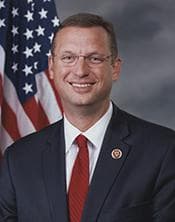
Doug Collins
Republican Representative
Georgia
Cosponsors (160)
Lamar Smith (Republican)Doug LaMalfa (Republican)Chris Stewart (Republican)Paul A. Gosar (Republican)Michael C. Burgess (Republican)Steve Chabot (Republican)Mia B. Love (Republican)Robert Pittenger (Republican)Bob Gibbs (Republican)Adrian Smith (Republican)Mo Brooks (Republican)John Katko (Republican)Frank D. Lucas (Republican)Markwayne Mullin (Republican)Trent Kelly (Republican)Eric A. "Rick" Crawford (Republican)Mark Meadows (Republican)Steven M. Palazzo (Republican)Pete Olson (Republican)Erik Paulsen (Republican)Randy Hultgren (Republican)Don Young (Republican)Brett Guthrie (Republican)Jim Banks (Republican)Andy Harris (Republican)Steve Stivers (Republican)Lee M. Zeldin (Republican)Kristi L. Noem (Republican)Jason Chaffetz (Republican)John Ratcliffe (Republican)Robert J. Wittman (Republican)Darin LaHood (Republican)John Abney Culberson (Republican)Kevin Brady (Republican)Glenn Thompson (Republican)Tim Murphy (Republican)Claudia Tenney (Republican)Brad R. Wenstrup (Republican)Marsha Blackburn (Republican)Jackie Walorski (Republican)Edward R. Royce (Republican)Ken Buck (Republican)Paul Cook (Republican)Stevan Pearce (Republican)Lynn Jenkins (Republican)Tom McClintock (Republican)Pete Sessions (Republican)David Rouzer (Republican)Greg Walden (Republican)Leonard Lance (Republican)Andy Biggs (Republican)Jeff Duncan (Republican)David Young (Republican)Tim Walberg (Republican)Keith J. Rothfus (Republican)Earl L. "Buddy" Carter (Republican)Billy Long (Republican)Lou Barletta (Republican)Rob Bishop (Republican)Mark Sanford (Republican)Sam Johnson (Republican)Mike Bishop (Republican)Ken Calvert (Republican)Todd Rokita (Republican)Thomas Massie (Republican)J. French Hill (Republican)Jim Jordan (Republican)James B. Renacci (Republican)David B. McKinley (Republican)Jason Smith (Republican)Dan Newhouse (Republican)Barry Loudermilk (Republican)Luke Messer (Republican)Ralph Lee Abraham (Republican)Martha McSally (Republican)Kenny Marchant (Republican)Gus M. Bilirakis (Republican)Steve Scalise (Republican)Ron DeSantis (Republican)Paul Mitchell (Independent)H. Morgan Griffith (Republican)Jody B. Hice (Republican)Bill Flores (Republican)Don Bacon (Republican)Andy Barr (Republican)Darrell Issa (Republican)David P. Joyce (Republican)Doug Lamborn (Republican)Ted Poe (Republican)Ann Wagner (Republican)Rodney Davis (Republican)Mike Kelly (Republican)Peter J. Roskam (Republican)Richard Hudson (Republican)Roger Williams (Republican)Ryan A. Costello (Republican)Bill Shuster (Republican)Chris Collins (Republican)Glenn Grothman (Republican)Kevin Cramer (Republican)Patrick J. Tiberi (Republican)John R. Moolenaar (Republican)Bruce Westerman (Republican)John H. Rutherford (Republican)Charles J. "Chuck" Fleischmann (Republican)Rob Woodall (Republican)Trey Hollingsworth (Republican)Stephen Knight (Republican)Blaine Luetkemeyer (Republican)Jeb Hensarling (Republican)Thomas J. Rooney (Republican)Larry Bucshon (Republican)Mark Walker (Republican)Michael T. McCaul (Republican)Tom Marino (Republican)Gary J. Palmer (Republican)Raul R. Labrador (Republican)Mark E. Amodei (Republican)Garret Graves (Republican)Dave Brat (Republican)Sam Graves (Republican)Mike Bost (Republican)Scott DesJarlais (Republican)Michael K. Simpson (Republican)Diane Black (Republican)Michael R. Turner (Republican)Ted S. Yoho (Republican)Mac Thornberry (Republican)Jeff Fortenberry (Republican)Bradley Byrne (Republican)Vicky Hartzler (Republican)Tom Emmer (Republican)Bill Huizenga (Republican)Matt Gaetz (Republican)Tom Reed (Republican)Bob Goodlatte (Republican)Rodney P. Frelinghuysen (Republican)Bill Posey (Republican)Joe Barton (Republican)Susan W. Brooks (Republican)David A. Trott (Republican)Evan H. Jenkins (Republican)Tom Graves (Republican)Scott R. Tipton (Republican)Kevin Yoder (Republican)George Holding (Republican)Sean P. Duffy (Republican)Harold Rogers (Republican)Cathy McMorris Rodgers (Republican)Jack Bergman (Republican)Louie Gohmert (Republican)Bill Johnson (Republican)Jaime Herrera Beutler (Republican)David P. Roe (Republican)Robert B. Aderholt (Republican)Mimi Walters (Republican)Brian Babin (Republican)Barbara Comstock (Republican)Duncan D. Hunter (Republican)John Shimkus (Republican)
Committees (6)
• Administrative State, Regulatory Reform, and Antitrust Subcommittee• Small Business and Entrepreneurship Committee• Homeland Security and Governmental Affairs Committee• Rules Committee• Judiciary Committee• Budget Committee
- Introduced
- In Committee
- On Floor
- Passed Chamber
- Enacted
Regulations from the Executive in Need of Scrutiny Act of 2017 (Sec. 2) This bill states that its purpose is to increase accountability for and transparency in the federal regulatory process by requiring Congress to approve all new major regulations. (Sec. 3) The bill revises provisions relating to congressional review of agency rulemaking to require federal agencies promulgating rules to: (1) identify and repeal or amend existing rules to completely offset any annual costs of new rules to the U.S. economy; and (2) publish information about the rules in the Federal Register and include in their reports to Congress and to the Government Accountability Office (GAO) a classification of the rules as major or nonmajor rules and a complete copy of the cost-benefit analysis of the rules, including an analysis of any jobs added or lost, differentiating between public and private sector jobs. A "major rule" is any rule that the Office of Information and Regulatory Affairs of the Office of Management and Budget finds has resulted in or is likely to result in: (1) an annual cost on the economy of $100 million or more (adjusted annually for inflation); (2) a major increase in costs or prices for consumers, individual industries, federal, state, or local government agencies, or geographic regions; or (3) significant adverse effects on competition, employment, investment, productivity, innovation, or the ability of U.S.-based enterprises to compete with foreign-based enterprises. A joint resolution of approval of major rules must be enacted before such rules may take effect (currently, major rules take effect unless a joint resolution disapproving them is enacted). If a joint resolution of approval is not enacted by the end of 70 session days or legislative days, as applicable, after the agency proposing the rule submits its report on such rule to Congress, the major rule shall be deemed not to be approved and shall not take effect. The bill permits a major rule to take effect for one 90-calendar day period without such approval if the President determines it is necessary because of an imminent threat to health or safety or other emergency, for the enforcement of criminal laws, for national security, or to implement an international trade agreement. The bill sets forth the congressional approval procedure for major rules and the congressional disapproval procedure for nonmajor rules. Agencies are prohibited from allowing a major rule to take effect without the congressional review procedures set forth in this bill. A joint resolution addressing a report classifying a rule must be introduced as a major rule within three legislative days in the House of Representative and three session days in the Senate. The bill: (1) prohibits any amendments to such a joint resolution at any stage of the legislative process; (2) provides for expedited consideration of a joint resolution of approval; and (3) requires a vote on such resolution in the Senate within 15 session days after it is reported by the committee to which it was referred, or after such committee has been discharged from further consideration of the resolution. A court may review whether an agency has completed the necessary requirements under this bill for a rule to take effect (currently, no judicial review of a determination, finding, action, or omission in the rulemaking process is subject to judicial review). The bill limits the effect of a joint resolution of approval of a major rule. The bill is inapplicable to rules that concern monetary policy proposed or implemented by the Board of Governors of the Federal Reserve System or the Federal Open Market Committee. Any rule promulgated by a federal agency that relates to a regulatory program for a commercial, recreational, or subsistence activity related to hunting, fishing, or camping, or any rule other than a major rule for which an agency for good cause finds that notice and public procedure thereon are impracticable, unnecessary, or contrary to the public interest, shall take effect at such time as the agency determines. Before new rules take effect, agencies must amend or repeal other rules to offset any annual costs of the new rules to the U.S. economy. Over a 10-year period, agencies must submit reports designating for congressional review all agency rules that are in effect as of one year after enactment of this bill. If Congress does not enact a joint resolution of approval for such rules, the rules shall not continue in effect. (Sec. 4) The Balanced Budget and Emergency Deficit Control Act of 1985 is amended to provide that any congressional approval procedure set forth in this bill affecting budget authority, outlays, or receipts shall be assumed to be effective unless it is not approved in accordance with this bill. (Sec. 5) The GAO must conduct a study to determine as of the date of enactment of this bill: (1) how many rules were in effect, (2) how many major rules were in effect, and (3) the total estimated economic cost imposed by all such rules. The GAO must report to Congress on such study within one year of the enactment of this bill.
Suggested Questions
Get AI-generated questions to help you understand this bill better
Timeline
Introduced in House
Referred to the Committee on the Judiciary, and in addition to the Committees on Rules, and the Budget, for a period to be subsequently determined by the Speaker, in each case for consideration of such provisions as fall within the jurisdiction of the committee concerned.
Referred to the Subcommittee on Regulatory Reform, Commercial And Antitrust Law.
Rules Committee Resolution H. Res. 22 Reported to House. Both measures shall be considered as read, the previous questions shall be considered as ordered without intervening motion or demand for division of the question except one hour of debate. The rule makes in order a motion to recommit H.R. 26 with or without instructions.
Considered under the provisions of rule H. Res. 22. (consideration: CR H124-146; text of measure as introduced: CR H132-134)
Both H. Res. 11 and H.R. 26 shall be considered as read, and the previous questions shall be considered as ordered without intervening motion or demand for division of the question except one hour of debate. The rule makes in order a motion to recommit on H.R. 26 with or without instructions.
House resolved itself into the Committee of the Whole House on the state of the Union pursuant to H. Res. 22 and Rule XVIII.
The Speaker designated the Honorable Randy Hultgren to act as Chairman of the Committee.
GENERAL DEBATE - The Committee of the Whole proceeded with one hour of general debate on H.R. 26.
DEBATE - Pursuant to the provisions of H. Res. 22, the Committee of the Whole proceeded with 10 minutes of debate on the Goodlatte amendment No. 1.
DEBATE - Pursuant to the provisions of H. Res. 22, the Committee of the Whole proceeded with 10 minutes of debate on the Messer amendment No. 2.
POSTPONED PROCEEDINGS - At the conclusion of debate on the Messer amendment, the Chair put the question on adoption of the amendment and by voice vote announced that the ayes had prevailed. Mr. Johnson (GA) demanded a recorded vote and the Chair postponed further proceedings on the question of adoption of the amendment until later in the legislative day.
DEBATE - Pursuant to the provisions of H. Res. 22, the Committee of the Whole proceeded with 10 minutes of debate on the Grijalva amendment No. 3.
POSTPONED PROCEEDINGS - At the conclusion of debate on the Grijalva amendment, the Chair put the question on adoption of the amendment and by voice vote announced that the noes had prevailed. Mr. Grijalva demanded a recorded vote and the Chair postponed further proceedings on the question of adoption of the amendment until later in the legislative day.
DEBATE - Pursuant to the provisions of H. Res. 22, the Committee of the Whole proceeded with 10 minutes of debate on the Castor (FL) amendment No. 4.
POSTPONED PROCEEDINGS - At the conclusion of debate on the Castor (FL) amendment, the Chair put the question on adoption of the amendment and by voice vote announced that the ayes had prevailed. Mr. Marino demanded a recorded vote and the Chair postponed further proceedings on the question of adoption of the amendment until later in the legislative day.
DEBATE - Pursuant to the provisions of H. Res. 22, the Committee of the Whole proceeded with 10 minutes of debate on the Cicilline amendment No. 5.
POSTPONED PROCEEDINGS - At the conclusion of debate on the Cicilline amendment, the Chair put the question on adoption of the amendment and by voice vote announced that the noes had prevailed. Mr. Cicilline demanded a recorded vote and the Chair postponed further proceedings on the question of adoption of the amendment until later in the legislative day.
DEBATE - Pursuant to the provisions of H. Res. 22, the Committee of the Whole proceeded with 10 minutes of debate on the Conyers amendment No. 6.
POSTPONED PROCEEDINGS - At the conclusion of debate on the Conyers amendment, the Chair put the question on adoption of the amendment and by voice vote announced that the noes had prevailed. Mr. Conyers demanded a recorded vote and the Chair postponed further proceedings on the question of adoption of the amendment until later in the legislative day.
DEBATE - Pursuant to the provisions of H. Res. 22, the Committee of the Whole proceeded with 10 minutes of debate on the Johnson (GA) amendment No. 7.
POSTPONED PROCEEDINGS - At the conclusion of debate on the Johnson (GA) amendment, the Chair put the question on adoption of the amendment and by voice vote announced that the noes had prevailed. Mr. Johnson (GA) demanded a recorded vote and the Chair postponed further proceedings on the question of adoption of the amendment until later in the legislative day.
DEBATE - Pursuant to the provisions of H. Res. 22, the Committee of the Whole proceeded with 10 minutes of debate on the Johnson (GA) amendment No. 8.
DEBATE - Pursuant to the provisions of H. Res. 22, the Committee of the Whole proceeded with 10 minutes of debate on the Nadler amendment No. 9.
POSTPONED PROCEEDINGS - At the conclusion of debate on the Nadler amendment, the Chair put the question on adoption of the amendment and by voice vote announced that the noes had prevailed. Mr. Nadler demanded a recorded vote and the Chair postponed further proceedings on the question of adoption of the amendment until later in the legislative day.
DEBATE - Pursuant to the provisions of H. Res. 22, the Committee of the Whole proceeded with 10 minutes of debate on the McNerney amendment No. 10.
POSTPONED PROCEEDINGS - At the conclusion of debate on the McNerney amendment, the Chair put the question on adoption of the amendment and by voice vote announced that the noes had prevailed. Mr. McNerney demanded a recorded vote and the Chair postponed further proceedings on the question of adoption of the amendment until later in the legislative day.
DEBATE - Pursuant to the provisions of H. Res. 22, the Committee of the Whole proceeded with 10 minutes of debate on the Scott (VA) amendment No. 11.
POSTPONED PROCEEDINGS - At the conclusion of debate on the Scott (VA) amendment, the Chair put the question on adoption of the amendment and by voice vote announced that the noes had prevailed. Mr. Scott (VA) demanded a recorded vote and the Chair postponed further proceedings on the question of adoption of the amendment until later in the legislative day.
DEBATE - Pursuant to the provisions of H. Res. 22, the Committee of the Whole proceeded with 10 minutes of debate on the King (IA) amendment No. 12.
POSTPONED PROCEEDINGS - At the conclusion of debate on the King (IA) amendment, the Chair put the question on adoption of the amendment and by voice vote announced that the ayes had prevailed. Mr. Johnson (GA) demanded a recorded vote and the Chair postponed further proceedings on the question of adoption of the amendment until later in the legislative day.
Mr. Marino moved that the committee rise.
On motion that the committee rise Agreed to by voice vote.
Committee of the Whole House on the state of the Union rises leaving H.R. 26 as unfinished business.
Considered as unfinished business. (consideration: CR H165-174)
The House resolved into Committee of the Whole House on the state of the Union for further consideration.
UNFINISHED BUSINESS - The Chair announced that the unfinished business was on adoption of amendments, which were debated earlier and on which further proceedings had been postponed.
The House rose from the Committee of the Whole House on the state of the Union to report H.R. 26.
The House adopted the amendments en gross as agreed to by the Committee of the Whole House on the state of the Union.
Mrs. Murphy (FL) moved to recommit with instructions to the Committee on the Judiciary. (text: CR H172)
DEBATE - The House proceeded with 10 minutes of debate on the motion to recommit with instructions. The instructions contained in the motion seek to require the bill to be reported back to the House with an amendment to add a new section to the bill that prohibits an insurance issuer from eliminating, weakening, or reducing health coverage benefits for dependents under the age of 26.
The previous question on the motion to recommit with instructions was ordered without objection.
On motion to recommit with instructions Failed by recorded vote: 190 - 235 (Roll no. 22).
View VoteOn passage Passed by recorded vote: 237 - 187 (Roll no. 23).
View VoteMotion to reconsider laid on the table Agreed to without objection.
Received in the Senate and Read twice and referred to the Committee on Homeland Security and Governmental Affairs.
Committee on Small Business and Entrepreneurship. Hearings held. Hearings printed: S.Hrg. 115-21.
Latest Companion Bill Action
S 115-21Committee on Homeland Security and Governmental Affairs. Reported by Senator Johnson with amendments. With written report No. 115-169. Minority views filed.
Government Operations and Politics
Administrative law and regulatory proceduresAdvanced technology and technological innovationsBusiness investment and capitalCompetition and antitrustCompetitiveness, trade promotion, trade deficitsCongressional oversightEconomic performance and conditionsIndustrial policy and productivityInflation and pricesJudicial review and appealsLegislative rules and procedureUnemployment
Regulations from the Executive in Need of Scrutiny Act of 2017
USA115th CongressHR-26| House
| Updated: 3/29/2017
Regulations from the Executive in Need of Scrutiny Act of 2017 (Sec. 2) This bill states that its purpose is to increase accountability for and transparency in the federal regulatory process by requiring Congress to approve all new major regulations. (Sec. 3) The bill revises provisions relating to congressional review of agency rulemaking to require federal agencies promulgating rules to: (1) identify and repeal or amend existing rules to completely offset any annual costs of new rules to the U.S. economy; and (2) publish information about the rules in the Federal Register and include in their reports to Congress and to the Government Accountability Office (GAO) a classification of the rules as major or nonmajor rules and a complete copy of the cost-benefit analysis of the rules, including an analysis of any jobs added or lost, differentiating between public and private sector jobs. A "major rule" is any rule that the Office of Information and Regulatory Affairs of the Office of Management and Budget finds has resulted in or is likely to result in: (1) an annual cost on the economy of $100 million or more (adjusted annually for inflation); (2) a major increase in costs or prices for consumers, individual industries, federal, state, or local government agencies, or geographic regions; or (3) significant adverse effects on competition, employment, investment, productivity, innovation, or the ability of U.S.-based enterprises to compete with foreign-based enterprises. A joint resolution of approval of major rules must be enacted before such rules may take effect (currently, major rules take effect unless a joint resolution disapproving them is enacted). If a joint resolution of approval is not enacted by the end of 70 session days or legislative days, as applicable, after the agency proposing the rule submits its report on such rule to Congress, the major rule shall be deemed not to be approved and shall not take effect. The bill permits a major rule to take effect for one 90-calendar day period without such approval if the President determines it is necessary because of an imminent threat to health or safety or other emergency, for the enforcement of criminal laws, for national security, or to implement an international trade agreement. The bill sets forth the congressional approval procedure for major rules and the congressional disapproval procedure for nonmajor rules. Agencies are prohibited from allowing a major rule to take effect without the congressional review procedures set forth in this bill. A joint resolution addressing a report classifying a rule must be introduced as a major rule within three legislative days in the House of Representative and three session days in the Senate. The bill: (1) prohibits any amendments to such a joint resolution at any stage of the legislative process; (2) provides for expedited consideration of a joint resolution of approval; and (3) requires a vote on such resolution in the Senate within 15 session days after it is reported by the committee to which it was referred, or after such committee has been discharged from further consideration of the resolution. A court may review whether an agency has completed the necessary requirements under this bill for a rule to take effect (currently, no judicial review of a determination, finding, action, or omission in the rulemaking process is subject to judicial review). The bill limits the effect of a joint resolution of approval of a major rule. The bill is inapplicable to rules that concern monetary policy proposed or implemented by the Board of Governors of the Federal Reserve System or the Federal Open Market Committee. Any rule promulgated by a federal agency that relates to a regulatory program for a commercial, recreational, or subsistence activity related to hunting, fishing, or camping, or any rule other than a major rule for which an agency for good cause finds that notice and public procedure thereon are impracticable, unnecessary, or contrary to the public interest, shall take effect at such time as the agency determines. Before new rules take effect, agencies must amend or repeal other rules to offset any annual costs of the new rules to the U.S. economy. Over a 10-year period, agencies must submit reports designating for congressional review all agency rules that are in effect as of one year after enactment of this bill. If Congress does not enact a joint resolution of approval for such rules, the rules shall not continue in effect. (Sec. 4) The Balanced Budget and Emergency Deficit Control Act of 1985 is amended to provide that any congressional approval procedure set forth in this bill affecting budget authority, outlays, or receipts shall be assumed to be effective unless it is not approved in accordance with this bill. (Sec. 5) The GAO must conduct a study to determine as of the date of enactment of this bill: (1) how many rules were in effect, (2) how many major rules were in effect, and (3) the total estimated economic cost imposed by all such rules. The GAO must report to Congress on such study within one year of the enactment of this bill.
Suggested Questions
Get AI-generated questions to help you understand this bill better
Timeline
Introduced in House
Referred to the Committee on the Judiciary, and in addition to the Committees on Rules, and the Budget, for a period to be subsequently determined by the Speaker, in each case for consideration of such provisions as fall within the jurisdiction of the committee concerned.
Referred to the Subcommittee on Regulatory Reform, Commercial And Antitrust Law.
Rules Committee Resolution H. Res. 22 Reported to House. Both measures shall be considered as read, the previous questions shall be considered as ordered without intervening motion or demand for division of the question except one hour of debate. The rule makes in order a motion to recommit H.R. 26 with or without instructions.
Considered under the provisions of rule H. Res. 22. (consideration: CR H124-146; text of measure as introduced: CR H132-134)
Both H. Res. 11 and H.R. 26 shall be considered as read, and the previous questions shall be considered as ordered without intervening motion or demand for division of the question except one hour of debate. The rule makes in order a motion to recommit on H.R. 26 with or without instructions.
House resolved itself into the Committee of the Whole House on the state of the Union pursuant to H. Res. 22 and Rule XVIII.
The Speaker designated the Honorable Randy Hultgren to act as Chairman of the Committee.
GENERAL DEBATE - The Committee of the Whole proceeded with one hour of general debate on H.R. 26.
DEBATE - Pursuant to the provisions of H. Res. 22, the Committee of the Whole proceeded with 10 minutes of debate on the Goodlatte amendment No. 1.
DEBATE - Pursuant to the provisions of H. Res. 22, the Committee of the Whole proceeded with 10 minutes of debate on the Messer amendment No. 2.
POSTPONED PROCEEDINGS - At the conclusion of debate on the Messer amendment, the Chair put the question on adoption of the amendment and by voice vote announced that the ayes had prevailed. Mr. Johnson (GA) demanded a recorded vote and the Chair postponed further proceedings on the question of adoption of the amendment until later in the legislative day.
DEBATE - Pursuant to the provisions of H. Res. 22, the Committee of the Whole proceeded with 10 minutes of debate on the Grijalva amendment No. 3.
POSTPONED PROCEEDINGS - At the conclusion of debate on the Grijalva amendment, the Chair put the question on adoption of the amendment and by voice vote announced that the noes had prevailed. Mr. Grijalva demanded a recorded vote and the Chair postponed further proceedings on the question of adoption of the amendment until later in the legislative day.
DEBATE - Pursuant to the provisions of H. Res. 22, the Committee of the Whole proceeded with 10 minutes of debate on the Castor (FL) amendment No. 4.
POSTPONED PROCEEDINGS - At the conclusion of debate on the Castor (FL) amendment, the Chair put the question on adoption of the amendment and by voice vote announced that the ayes had prevailed. Mr. Marino demanded a recorded vote and the Chair postponed further proceedings on the question of adoption of the amendment until later in the legislative day.
DEBATE - Pursuant to the provisions of H. Res. 22, the Committee of the Whole proceeded with 10 minutes of debate on the Cicilline amendment No. 5.
POSTPONED PROCEEDINGS - At the conclusion of debate on the Cicilline amendment, the Chair put the question on adoption of the amendment and by voice vote announced that the noes had prevailed. Mr. Cicilline demanded a recorded vote and the Chair postponed further proceedings on the question of adoption of the amendment until later in the legislative day.
DEBATE - Pursuant to the provisions of H. Res. 22, the Committee of the Whole proceeded with 10 minutes of debate on the Conyers amendment No. 6.
POSTPONED PROCEEDINGS - At the conclusion of debate on the Conyers amendment, the Chair put the question on adoption of the amendment and by voice vote announced that the noes had prevailed. Mr. Conyers demanded a recorded vote and the Chair postponed further proceedings on the question of adoption of the amendment until later in the legislative day.
DEBATE - Pursuant to the provisions of H. Res. 22, the Committee of the Whole proceeded with 10 minutes of debate on the Johnson (GA) amendment No. 7.
POSTPONED PROCEEDINGS - At the conclusion of debate on the Johnson (GA) amendment, the Chair put the question on adoption of the amendment and by voice vote announced that the noes had prevailed. Mr. Johnson (GA) demanded a recorded vote and the Chair postponed further proceedings on the question of adoption of the amendment until later in the legislative day.
DEBATE - Pursuant to the provisions of H. Res. 22, the Committee of the Whole proceeded with 10 minutes of debate on the Johnson (GA) amendment No. 8.
DEBATE - Pursuant to the provisions of H. Res. 22, the Committee of the Whole proceeded with 10 minutes of debate on the Nadler amendment No. 9.
POSTPONED PROCEEDINGS - At the conclusion of debate on the Nadler amendment, the Chair put the question on adoption of the amendment and by voice vote announced that the noes had prevailed. Mr. Nadler demanded a recorded vote and the Chair postponed further proceedings on the question of adoption of the amendment until later in the legislative day.
DEBATE - Pursuant to the provisions of H. Res. 22, the Committee of the Whole proceeded with 10 minutes of debate on the McNerney amendment No. 10.
POSTPONED PROCEEDINGS - At the conclusion of debate on the McNerney amendment, the Chair put the question on adoption of the amendment and by voice vote announced that the noes had prevailed. Mr. McNerney demanded a recorded vote and the Chair postponed further proceedings on the question of adoption of the amendment until later in the legislative day.
DEBATE - Pursuant to the provisions of H. Res. 22, the Committee of the Whole proceeded with 10 minutes of debate on the Scott (VA) amendment No. 11.
POSTPONED PROCEEDINGS - At the conclusion of debate on the Scott (VA) amendment, the Chair put the question on adoption of the amendment and by voice vote announced that the noes had prevailed. Mr. Scott (VA) demanded a recorded vote and the Chair postponed further proceedings on the question of adoption of the amendment until later in the legislative day.
DEBATE - Pursuant to the provisions of H. Res. 22, the Committee of the Whole proceeded with 10 minutes of debate on the King (IA) amendment No. 12.
POSTPONED PROCEEDINGS - At the conclusion of debate on the King (IA) amendment, the Chair put the question on adoption of the amendment and by voice vote announced that the ayes had prevailed. Mr. Johnson (GA) demanded a recorded vote and the Chair postponed further proceedings on the question of adoption of the amendment until later in the legislative day.
Mr. Marino moved that the committee rise.
On motion that the committee rise Agreed to by voice vote.
Committee of the Whole House on the state of the Union rises leaving H.R. 26 as unfinished business.
Considered as unfinished business. (consideration: CR H165-174)
The House resolved into Committee of the Whole House on the state of the Union for further consideration.
UNFINISHED BUSINESS - The Chair announced that the unfinished business was on adoption of amendments, which were debated earlier and on which further proceedings had been postponed.
The House rose from the Committee of the Whole House on the state of the Union to report H.R. 26.
The House adopted the amendments en gross as agreed to by the Committee of the Whole House on the state of the Union.
Mrs. Murphy (FL) moved to recommit with instructions to the Committee on the Judiciary. (text: CR H172)
DEBATE - The House proceeded with 10 minutes of debate on the motion to recommit with instructions. The instructions contained in the motion seek to require the bill to be reported back to the House with an amendment to add a new section to the bill that prohibits an insurance issuer from eliminating, weakening, or reducing health coverage benefits for dependents under the age of 26.
The previous question on the motion to recommit with instructions was ordered without objection.
On motion to recommit with instructions Failed by recorded vote: 190 - 235 (Roll no. 22).
View VoteOn passage Passed by recorded vote: 237 - 187 (Roll no. 23).
View VoteMotion to reconsider laid on the table Agreed to without objection.
Received in the Senate and Read twice and referred to the Committee on Homeland Security and Governmental Affairs.
Committee on Small Business and Entrepreneurship. Hearings held. Hearings printed: S.Hrg. 115-21.
Latest Companion Bill Action
S 115-21Committee on Homeland Security and Governmental Affairs. Reported by Senator Johnson with amendments. With written report No. 115-169. Minority views filed.
Doug Collins
Republican Representative
Georgia
Cosponsors (160)
Lamar Smith (Republican)Doug LaMalfa (Republican)Chris Stewart (Republican)Paul A. Gosar (Republican)Michael C. Burgess (Republican)Steve Chabot (Republican)Mia B. Love (Republican)Robert Pittenger (Republican)Bob Gibbs (Republican)Adrian Smith (Republican)Mo Brooks (Republican)John Katko (Republican)Frank D. Lucas (Republican)Markwayne Mullin (Republican)Trent Kelly (Republican)Eric A. "Rick" Crawford (Republican)Mark Meadows (Republican)Steven M. Palazzo (Republican)Pete Olson (Republican)Erik Paulsen (Republican)Randy Hultgren (Republican)Don Young (Republican)Brett Guthrie (Republican)Jim Banks (Republican)Andy Harris (Republican)Steve Stivers (Republican)Lee M. Zeldin (Republican)Kristi L. Noem (Republican)Jason Chaffetz (Republican)John Ratcliffe (Republican)Robert J. Wittman (Republican)Darin LaHood (Republican)John Abney Culberson (Republican)Kevin Brady (Republican)Glenn Thompson (Republican)Tim Murphy (Republican)Claudia Tenney (Republican)Brad R. Wenstrup (Republican)Marsha Blackburn (Republican)Jackie Walorski (Republican)Edward R. Royce (Republican)Ken Buck (Republican)Paul Cook (Republican)Stevan Pearce (Republican)Lynn Jenkins (Republican)Tom McClintock (Republican)Pete Sessions (Republican)David Rouzer (Republican)Greg Walden (Republican)Leonard Lance (Republican)Andy Biggs (Republican)Jeff Duncan (Republican)David Young (Republican)Tim Walberg (Republican)Keith J. Rothfus (Republican)Earl L. "Buddy" Carter (Republican)Billy Long (Republican)Lou Barletta (Republican)Rob Bishop (Republican)Mark Sanford (Republican)Sam Johnson (Republican)Mike Bishop (Republican)Ken Calvert (Republican)Todd Rokita (Republican)Thomas Massie (Republican)J. French Hill (Republican)Jim Jordan (Republican)James B. Renacci (Republican)David B. McKinley (Republican)Jason Smith (Republican)Dan Newhouse (Republican)Barry Loudermilk (Republican)Luke Messer (Republican)Ralph Lee Abraham (Republican)Martha McSally (Republican)Kenny Marchant (Republican)Gus M. Bilirakis (Republican)Steve Scalise (Republican)Ron DeSantis (Republican)Paul Mitchell (Independent)H. Morgan Griffith (Republican)Jody B. Hice (Republican)Bill Flores (Republican)Don Bacon (Republican)Andy Barr (Republican)Darrell Issa (Republican)David P. Joyce (Republican)Doug Lamborn (Republican)Ted Poe (Republican)Ann Wagner (Republican)Rodney Davis (Republican)Mike Kelly (Republican)Peter J. Roskam (Republican)Richard Hudson (Republican)Roger Williams (Republican)Ryan A. Costello (Republican)Bill Shuster (Republican)Chris Collins (Republican)Glenn Grothman (Republican)Kevin Cramer (Republican)Patrick J. Tiberi (Republican)John R. Moolenaar (Republican)Bruce Westerman (Republican)John H. Rutherford (Republican)Charles J. "Chuck" Fleischmann (Republican)Rob Woodall (Republican)Trey Hollingsworth (Republican)Stephen Knight (Republican)Blaine Luetkemeyer (Republican)Jeb Hensarling (Republican)Thomas J. Rooney (Republican)Larry Bucshon (Republican)Mark Walker (Republican)Michael T. McCaul (Republican)Tom Marino (Republican)Gary J. Palmer (Republican)Raul R. Labrador (Republican)Mark E. Amodei (Republican)Garret Graves (Republican)Dave Brat (Republican)Sam Graves (Republican)Mike Bost (Republican)Scott DesJarlais (Republican)Michael K. Simpson (Republican)Diane Black (Republican)Michael R. Turner (Republican)Ted S. Yoho (Republican)Mac Thornberry (Republican)Jeff Fortenberry (Republican)Bradley Byrne (Republican)Vicky Hartzler (Republican)Tom Emmer (Republican)Bill Huizenga (Republican)Matt Gaetz (Republican)Tom Reed (Republican)Bob Goodlatte (Republican)Rodney P. Frelinghuysen (Republican)Bill Posey (Republican)Joe Barton (Republican)Susan W. Brooks (Republican)David A. Trott (Republican)Evan H. Jenkins (Republican)Tom Graves (Republican)Scott R. Tipton (Republican)Kevin Yoder (Republican)George Holding (Republican)Sean P. Duffy (Republican)Harold Rogers (Republican)Cathy McMorris Rodgers (Republican)Jack Bergman (Republican)Louie Gohmert (Republican)Bill Johnson (Republican)Jaime Herrera Beutler (Republican)David P. Roe (Republican)Robert B. Aderholt (Republican)Mimi Walters (Republican)Brian Babin (Republican)Barbara Comstock (Republican)Duncan D. Hunter (Republican)John Shimkus (Republican)
Committees (6)
• Administrative State, Regulatory Reform, and Antitrust Subcommittee• Small Business and Entrepreneurship Committee• Homeland Security and Governmental Affairs Committee• Rules Committee• Judiciary Committee• Budget Committee
Government Operations and Politics
Related Bills
- S 115-21: Regulations from the Executive in Need of Scrutiny Act of 2017
- HR 115-6147: Interior, Environment, Financial Services and General Government, Agriculture, Rural Development, Food and Drug Administration, and Transportation, Housing and Urban Development Appropriations Act, 2019
- HR 115-3442: To provide for a study and reconsideration by Congress of certain major rules, and for other purposes.
- HRES 115-22: Providing for consideration of the bill (H.R. 26) to amend chapter 8 of title 5, United States Code, to provide that major rules of the executive branch shall have no force or effect unless a joint resolution of approval is enacted into law, and providing for consideration of the resolution (H. Res. 11) objecting to United Nations Security Council Resolution 2334 as an obstacle to Israeli-Palestinian peace, and for other purposes.
- Introduced
- In Committee
- On Floor
- Passed Chamber
- Enacted
Administrative law and regulatory proceduresAdvanced technology and technological innovationsBusiness investment and capitalCompetition and antitrustCompetitiveness, trade promotion, trade deficitsCongressional oversightEconomic performance and conditionsIndustrial policy and productivityInflation and pricesJudicial review and appealsLegislative rules and procedureUnemployment