Orrin G. Hatch-Bob Goodlatte Music Modernization Act
USA115th CongressHR-1551| House
| Updated: 10/11/2018
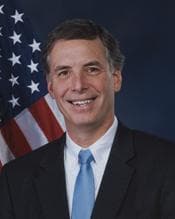
Tom Rice
Republican Representative
South Carolina
Cosponsors (32)
David Schweikert (Republican)Marc A. Veasey (Democratic)Steven M. Palazzo (Republican)Martha Roby (Republican)Erik Paulsen (Republican)Rick W. Allen (Republican)Sanford D. Bishop (Democratic)David Scott (Democratic)Terri A. Sewell (Democratic)Jeff Duncan (Republican)Doug Collins (Republican)Earl L. "Buddy" Carter (Republican)Mark Sanford (Republican)James B. Renacci (Republican)Barry Loudermilk (Republican)Kenny Marchant (Republican)A. Drew Ferguson (Republican)Henry C. "Hank" Johnson (Democratic)Jody B. Hice (Republican)Don Bacon (Republican)Joe Wilson (Republican)Kyrsten Sinema (Independent)Mike Kelly (Republican)Mike D. Rogers (Republican)Trey Gowdy (Republican)Rob Woodall (Republican)Michael K. Simpson (Republican)James E. Clyburn (Democratic)Bradley Byrne (Republican)Earl Blumenauer (Democratic)Tom Graves (Republican)Grace F. Napolitano (Democratic)
Ways and Means Committee
- Introduced
- In Committee
- On Floor
- Passed Chamber
- Enacted
Orrin G. Hatch-Bob Goodlatte Music Modernization Act This bill updates copyright law by creating a new compulsory licensing system for digital music services that transmit sound recordings. It also provides for federal protection to sound recordings fixed before February 15, 1972, which are currently only covered by state law. It also authorizes royalties for producers, mixers, and sound engineers that made a creative contribution to a sound recording. TITLE I--Music Licensing Modernization Musical Works Modernization Act Compulsory licensing systems allow a person or company to use a copyright-protected work by agreeing to pay a set rate, without having to negotiate with or get explicit permission from the rights holder. This title updates requirements for compulsory licenses for sound recordings. It establishes a new compulsory licensing system that is explicitly available to digital music service providers, where it was unclear whether previously available compulsory licenses granted the rights needed by such services. Under this title, compulsory licenses are available for sound recordings that have previously been distributed to the public. If the recording has not been publicly distributed, a digital music service can get a license for the recording with the permission of the owner of the distribution right. The new compulsory license is called a blanket license, which covers essentially all publicly distributed sound recordings. It gives the licensee the right to make and distribute digital copies of the recordings, along with reasonable and necessary activities such as making server and incidental reproductions. The blanket license shall be available January 1, 2021. When the blanket license becomes available, it shall replace any compulsory licenses that the digital music service provider had previously obtained. If a digital music provider and rights holder has a voluntary agreement in place, in most instances that voluntary agreement shall remain in effect even after the blanket license becomes available. The Copyright Office shall designate a nonprofit entity to administer the blanket license, which the bill refers to as the mechanical licensing collective. The collective's duties include: offering and administering blanket licenses, and collecting and distributing royalties; maintaining a musical works database with information needed to run the system; handling requests to claim ownership of copyrights, and devising a method for distributing royalties for works with unknown owners; collecting administrative assessments from digital music providers and other licensees to support the collective's functions; enforcing rights and obligations under the license; and maintaining and providing necessary information for proceedings to set royalty rates and assessments. Digital music service providers seeking a blanket license shall notify the mechanical licensing collective of its activities that fall under the license. The license shall go into effect within 30 days of the collective receiving the notice, unless the collective issues a written rejection explaining its reasons. The collective can only reject a notice of license if the provider has had a blanket license terminated in the past three years, or if the notice fails to meet statutory or legal requirements. If a digital music provider makes and distributes recordings without a license, it shall be barred from getting a blanket license for three years. The mechanical licensing collective shall establish a publicly-searchable database with information including the title of the recording, the copyright owners and ownership percentages of each, and the owners' contact information. The database shall also have entries for recordings where the ownership information is unknown or incomplete. Copyright owners shall make commercially reasonable efforts to provide information about their recordings for the database. The mechanical licensing collective shall collect and distribute royalties based on usage reports provided by the digital service providers. For recordings with unknown copyright holders, the collective shall place the collected royalties in an interest-bearing account. After three years, the unknown owner royalties and accrued interest shall be distributed to the known copyright holders in the database, with each receiving a portion based on their relative market shares. The copyright holders shall pay no less than 50% of the unclaimed royalties to songwriters. The licensees shall make monthly royalty payments to the collective and submit reports about its usage of musical works covered by the blanket license. A digital music service provider shall be in default if it misses a monthly royalty payment or report, fails to pay an administrative assessment, or breaches another material term of the blanket license. The mechanical licensing collective shall notify the provider in writing of the default, and that the license shall automatically terminate in 60 days unless the service provider fixes the defects. The bill requires licensees with significant non-blanket activities to report their monthly usage data to the mechanical licensing collective and pay an administrative assessment to help support the collective's activities. These significant non-blanket licensees are typically large licensees that took voluntary licenses with rights holders rather than, or alongside, a blanket license. The Copyright Office shall also designate a nonprofit entity to coordinate the licensees' activities with the music collective. This digital licensee coordinator's duties include helping the mechanical licensing collective collect administrative assessments, and gathering and maintaining information for use in proceedings to set the blanket license royalty rates. The Copyright Royalty Board shall hold proceedings to set the administrative assessment rates, based on the mechanical licensing collective's costs. The board shall also hold proceedings to set the rates and terms for the blanket license that most clearly represent what would have been negotiated in the marketplace, and based on economic and competitive information presented by the parties. The mechanical licensing collective and digital licensee coordinator shall not participate directly in the rate setting proceeding, but may gather and provide economic and usage data for the parties. Compulsory licenses used for reproduction and distribution rights shall in most instances be automatically substituted for the blanket license when it becomes available. Compulsory licenses for making and distributing permanent downloads will not convert to the blanket license until the record company terminates the license. Voluntary licensing agreements shall remain in effect after the blanket license becomes available. This title also temporarily limits the liability of digital music service providers for unlicensed uses on or after January 1, 2018. For unlicensed uses that fall within the blanket license, copyright holders shall only recover the royalty they would have received. To take advantage of this limited liability, the service provider must make monthly attempts to identify the rights holders of the relevant recordings and pay royalties to them. For unidentified rights holders, the music provider must calculate and collect the royalties, to be paid to the mechanical licensing collective when the blanket license becomes available. TITLE II--Classics Protection and Access Classics Protection and Access Act This title provides federal protection for sound recordings fixed before February 15, 1972, which are currently only covered by state law. Sound recordings first published before 1923 shall be protected through 2021. Recordings from 1923 to 1946 shall be protected through the end of the year that is 100 years from the date of first publication. Recordings from 1947 to 1956 shall be protected through the end of the year that is 110 years from first publication. Recordings fixed after 1956 and before February 15, 1972, shall be protected until February 15, 2067. Owners of copyrights for pre-1972 recordings shall receive royalties for digital audio transmissions and reproductions. These royalties shall be paid in accordance with already-established statutory licensing schemes for post-1972 sound recordings. This title also allows for the noncommercial use of orphan works, which are sound recordings with unidentified rights owners. The noncommercial use shall be allowed after the user makes a reasonable attempt to find the rights owner and fails to do so, and a public notice period to give the owner a chance to object to the use. To qualify for statutory damages or attorneys' fees in an infringement action involving pre-1972 recordings, the rights owner must file with the Copyright Office a notice with information about its claimed works. This title also preempts most state law claims involving pre-1972 sound recordings. TITLE III--ALLOCATION FOR MUSIC PRODUCERS Allocation for Music Producers Act or the AMP Act This title provides statutory authority for and expands existing practices for distributing royalties to producers, mixers, and sound engineers who made a creative contribution to a sound recording. A nonprofit collective designated by the Copyright Royalty Board shall adopt procedures for such royalty payments for various digital transmissions of the recording. The procedures shall allow the owner of the exclusive right to publicly perform the sound recording or the featured artist to instruct the collective to calculate and distribute the payments to the producers, mixers, and sound engineers. The instruction is called a "letter of direction." For sound recordings fixed before November 1, 1995, the nonprofit collective shall adopt policies for collecting and distributing such royalties, even without a letter of direction. The collective and those seeking royalties shall attempt to contact the featured artist to get a letter of direction. However, if the artist does not object within a specified time frame, the collective may distribute the royalties. This title preempts state laws that may otherwise apply, such as those related to abandoned property or escheatment.
Suggested Questions
Get AI-generated questions to help you understand this bill better
Timeline
Introduced in House
Referred to the House Committee on Ways and Means.
Ordered to be Reported by Voice Vote.
Committee Consideration and Mark-up Session Held.
Placed on the Union Calendar, Calendar No. 124.
Reported (Amended) by the Committee on Ways and Means. H. Rept. 115-183.
Mr. Rice (SC) moved to suspend the rules and pass the bill, as amended.
Considered under suspension of the rules. (consideration: CR H4958-4963)
DEBATE - The House proceeded with forty minutes of debate on H.R. 1551.
Passed/agreed to in House: On motion to suspend the rules and pass the bill, as amended Agreed to by voice vote.(text: CR H4958)
On motion to suspend the rules and pass the bill, as amended Agreed to by voice vote. (text: CR H4958)
Motion to reconsider laid on the table Agreed to without objection.
Received in the Senate.
Read the first time. Placed on Senate Legislative Calendar under Read the First Time.
Read the second time. Placed on Senate Legislative Calendar under General Orders. Calendar No. 300.
Passed/agreed to in Senate: Passed Senate with an amendment by Voice Vote.
Passed Senate with an amendment by Voice Vote.
Measure laid before Senate by unanimous consent. (consideration: CR S6259)
Message on Senate action sent to the House.
Resolving differences -- House actions: On motion that the House agree to the Senate amendment Agreed to without objection.(text as House agreed to Senate amendment: CR H8822-8837)
Mr. Collins (GA) asked unanimous consent to take from the Speaker's Table and agree to the Senate amendment. (consideration: CR H8822-8838)
On motion that the House agree to the Senate amendment Agreed to without objection. (text as House agreed to Senate amendment: CR H8822-8837)
Motion to reconsider laid on the table Agreed to without objection.
Correct Enrollment
Presented to President.
Signed by President.
Became Public Law No: 115-264.
Commerce
Civil actions and liabilityCongressional oversightCustoms enforcementDigital mediaElectric power generation and transmissionFederal preemptionIncome tax creditsIntellectual propertyLicensing and registrationsMusicNuclear powerSound recordingState and local government operationsUser charges and fees
Orrin G. Hatch-Bob Goodlatte Music Modernization Act
USA115th CongressHR-1551| House
| Updated: 10/11/2018
Orrin G. Hatch-Bob Goodlatte Music Modernization Act This bill updates copyright law by creating a new compulsory licensing system for digital music services that transmit sound recordings. It also provides for federal protection to sound recordings fixed before February 15, 1972, which are currently only covered by state law. It also authorizes royalties for producers, mixers, and sound engineers that made a creative contribution to a sound recording. TITLE I--Music Licensing Modernization Musical Works Modernization Act Compulsory licensing systems allow a person or company to use a copyright-protected work by agreeing to pay a set rate, without having to negotiate with or get explicit permission from the rights holder. This title updates requirements for compulsory licenses for sound recordings. It establishes a new compulsory licensing system that is explicitly available to digital music service providers, where it was unclear whether previously available compulsory licenses granted the rights needed by such services. Under this title, compulsory licenses are available for sound recordings that have previously been distributed to the public. If the recording has not been publicly distributed, a digital music service can get a license for the recording with the permission of the owner of the distribution right. The new compulsory license is called a blanket license, which covers essentially all publicly distributed sound recordings. It gives the licensee the right to make and distribute digital copies of the recordings, along with reasonable and necessary activities such as making server and incidental reproductions. The blanket license shall be available January 1, 2021. When the blanket license becomes available, it shall replace any compulsory licenses that the digital music service provider had previously obtained. If a digital music provider and rights holder has a voluntary agreement in place, in most instances that voluntary agreement shall remain in effect even after the blanket license becomes available. The Copyright Office shall designate a nonprofit entity to administer the blanket license, which the bill refers to as the mechanical licensing collective. The collective's duties include: offering and administering blanket licenses, and collecting and distributing royalties; maintaining a musical works database with information needed to run the system; handling requests to claim ownership of copyrights, and devising a method for distributing royalties for works with unknown owners; collecting administrative assessments from digital music providers and other licensees to support the collective's functions; enforcing rights and obligations under the license; and maintaining and providing necessary information for proceedings to set royalty rates and assessments. Digital music service providers seeking a blanket license shall notify the mechanical licensing collective of its activities that fall under the license. The license shall go into effect within 30 days of the collective receiving the notice, unless the collective issues a written rejection explaining its reasons. The collective can only reject a notice of license if the provider has had a blanket license terminated in the past three years, or if the notice fails to meet statutory or legal requirements. If a digital music provider makes and distributes recordings without a license, it shall be barred from getting a blanket license for three years. The mechanical licensing collective shall establish a publicly-searchable database with information including the title of the recording, the copyright owners and ownership percentages of each, and the owners' contact information. The database shall also have entries for recordings where the ownership information is unknown or incomplete. Copyright owners shall make commercially reasonable efforts to provide information about their recordings for the database. The mechanical licensing collective shall collect and distribute royalties based on usage reports provided by the digital service providers. For recordings with unknown copyright holders, the collective shall place the collected royalties in an interest-bearing account. After three years, the unknown owner royalties and accrued interest shall be distributed to the known copyright holders in the database, with each receiving a portion based on their relative market shares. The copyright holders shall pay no less than 50% of the unclaimed royalties to songwriters. The licensees shall make monthly royalty payments to the collective and submit reports about its usage of musical works covered by the blanket license. A digital music service provider shall be in default if it misses a monthly royalty payment or report, fails to pay an administrative assessment, or breaches another material term of the blanket license. The mechanical licensing collective shall notify the provider in writing of the default, and that the license shall automatically terminate in 60 days unless the service provider fixes the defects. The bill requires licensees with significant non-blanket activities to report their monthly usage data to the mechanical licensing collective and pay an administrative assessment to help support the collective's activities. These significant non-blanket licensees are typically large licensees that took voluntary licenses with rights holders rather than, or alongside, a blanket license. The Copyright Office shall also designate a nonprofit entity to coordinate the licensees' activities with the music collective. This digital licensee coordinator's duties include helping the mechanical licensing collective collect administrative assessments, and gathering and maintaining information for use in proceedings to set the blanket license royalty rates. The Copyright Royalty Board shall hold proceedings to set the administrative assessment rates, based on the mechanical licensing collective's costs. The board shall also hold proceedings to set the rates and terms for the blanket license that most clearly represent what would have been negotiated in the marketplace, and based on economic and competitive information presented by the parties. The mechanical licensing collective and digital licensee coordinator shall not participate directly in the rate setting proceeding, but may gather and provide economic and usage data for the parties. Compulsory licenses used for reproduction and distribution rights shall in most instances be automatically substituted for the blanket license when it becomes available. Compulsory licenses for making and distributing permanent downloads will not convert to the blanket license until the record company terminates the license. Voluntary licensing agreements shall remain in effect after the blanket license becomes available. This title also temporarily limits the liability of digital music service providers for unlicensed uses on or after January 1, 2018. For unlicensed uses that fall within the blanket license, copyright holders shall only recover the royalty they would have received. To take advantage of this limited liability, the service provider must make monthly attempts to identify the rights holders of the relevant recordings and pay royalties to them. For unidentified rights holders, the music provider must calculate and collect the royalties, to be paid to the mechanical licensing collective when the blanket license becomes available. TITLE II--Classics Protection and Access Classics Protection and Access Act This title provides federal protection for sound recordings fixed before February 15, 1972, which are currently only covered by state law. Sound recordings first published before 1923 shall be protected through 2021. Recordings from 1923 to 1946 shall be protected through the end of the year that is 100 years from the date of first publication. Recordings from 1947 to 1956 shall be protected through the end of the year that is 110 years from first publication. Recordings fixed after 1956 and before February 15, 1972, shall be protected until February 15, 2067. Owners of copyrights for pre-1972 recordings shall receive royalties for digital audio transmissions and reproductions. These royalties shall be paid in accordance with already-established statutory licensing schemes for post-1972 sound recordings. This title also allows for the noncommercial use of orphan works, which are sound recordings with unidentified rights owners. The noncommercial use shall be allowed after the user makes a reasonable attempt to find the rights owner and fails to do so, and a public notice period to give the owner a chance to object to the use. To qualify for statutory damages or attorneys' fees in an infringement action involving pre-1972 recordings, the rights owner must file with the Copyright Office a notice with information about its claimed works. This title also preempts most state law claims involving pre-1972 sound recordings. TITLE III--ALLOCATION FOR MUSIC PRODUCERS Allocation for Music Producers Act or the AMP Act This title provides statutory authority for and expands existing practices for distributing royalties to producers, mixers, and sound engineers who made a creative contribution to a sound recording. A nonprofit collective designated by the Copyright Royalty Board shall adopt procedures for such royalty payments for various digital transmissions of the recording. The procedures shall allow the owner of the exclusive right to publicly perform the sound recording or the featured artist to instruct the collective to calculate and distribute the payments to the producers, mixers, and sound engineers. The instruction is called a "letter of direction." For sound recordings fixed before November 1, 1995, the nonprofit collective shall adopt policies for collecting and distributing such royalties, even without a letter of direction. The collective and those seeking royalties shall attempt to contact the featured artist to get a letter of direction. However, if the artist does not object within a specified time frame, the collective may distribute the royalties. This title preempts state laws that may otherwise apply, such as those related to abandoned property or escheatment.
Suggested Questions
Get AI-generated questions to help you understand this bill better
Timeline
Introduced in House
Referred to the House Committee on Ways and Means.
Ordered to be Reported by Voice Vote.
Committee Consideration and Mark-up Session Held.
Placed on the Union Calendar, Calendar No. 124.
Reported (Amended) by the Committee on Ways and Means. H. Rept. 115-183.
Mr. Rice (SC) moved to suspend the rules and pass the bill, as amended.
Considered under suspension of the rules. (consideration: CR H4958-4963)
DEBATE - The House proceeded with forty minutes of debate on H.R. 1551.
Passed/agreed to in House: On motion to suspend the rules and pass the bill, as amended Agreed to by voice vote.(text: CR H4958)
On motion to suspend the rules and pass the bill, as amended Agreed to by voice vote. (text: CR H4958)
Motion to reconsider laid on the table Agreed to without objection.
Received in the Senate.
Read the first time. Placed on Senate Legislative Calendar under Read the First Time.
Read the second time. Placed on Senate Legislative Calendar under General Orders. Calendar No. 300.
Passed/agreed to in Senate: Passed Senate with an amendment by Voice Vote.
Passed Senate with an amendment by Voice Vote.
Measure laid before Senate by unanimous consent. (consideration: CR S6259)
Message on Senate action sent to the House.
Resolving differences -- House actions: On motion that the House agree to the Senate amendment Agreed to without objection.(text as House agreed to Senate amendment: CR H8822-8837)
Mr. Collins (GA) asked unanimous consent to take from the Speaker's Table and agree to the Senate amendment. (consideration: CR H8822-8838)
On motion that the House agree to the Senate amendment Agreed to without objection. (text as House agreed to Senate amendment: CR H8822-8837)
Motion to reconsider laid on the table Agreed to without objection.
Correct Enrollment
Presented to President.
Signed by President.
Became Public Law No: 115-264.
Tom Rice
Republican Representative
South Carolina
Cosponsors (32)
David Schweikert (Republican)Marc A. Veasey (Democratic)Steven M. Palazzo (Republican)Martha Roby (Republican)Erik Paulsen (Republican)Rick W. Allen (Republican)Sanford D. Bishop (Democratic)David Scott (Democratic)Terri A. Sewell (Democratic)Jeff Duncan (Republican)Doug Collins (Republican)Earl L. "Buddy" Carter (Republican)Mark Sanford (Republican)James B. Renacci (Republican)Barry Loudermilk (Republican)Kenny Marchant (Republican)A. Drew Ferguson (Republican)Henry C. "Hank" Johnson (Democratic)Jody B. Hice (Republican)Don Bacon (Republican)Joe Wilson (Republican)Kyrsten Sinema (Independent)Mike Kelly (Republican)Mike D. Rogers (Republican)Trey Gowdy (Republican)Rob Woodall (Republican)Michael K. Simpson (Republican)James E. Clyburn (Democratic)Bradley Byrne (Republican)Earl Blumenauer (Democratic)Tom Graves (Republican)Grace F. Napolitano (Democratic)
Ways and Means Committee
Commerce
Related Bills
- S 115-2334: A bill to amend title 17, United States Code, to provide clarity with respect to, and to modernize, the licensing system for musical works under section 115 of that title, to ensure fairness in the establishment of certain rates and fees under sections 114 and 115 of that title, and for other purposes.
- HR 115-5447: Music Modernization Act
- HR 115-1881: To ensure that organizations with religious or moral convictions are allowed to continue to provide services for children.
- HR 115-1: An Act to provide for reconciliation pursuant to titles II and V of the concurrent resolution on the budget for fiscal year 2018.
- S 115-2625: A bill to amend title 17, United States Code, to provide for the payment of performance royalties to certain producers, mixers, and sound engineers of sound recordings, and for other purposes.
- S 115-2256: A bill to amend the Internal Revenue Code of 1986 to extend expiring provisions, and for other purposes.
- SCONRES 115-48: A concurrent resolution directing the Clerk of the House of Representatives to make corrections in the enrollment of H.R. 1551.
- S 115-2823: Music Modernization Act
- S 115-666: A bill to amend the Internal Revenue Code of 1986 to modify the credit for production from advanced nuclear power facilities.
- HR 115-4706: To amend title 17, United States Code, to provide clarity and modernize the licensing system for musical works under section 115 and to ensure fairness in the establishment of certain rates and fees under sections 114 and 115 of such title, and for other purposes.
- Introduced
- In Committee
- On Floor
- Passed Chamber
- Enacted
Civil actions and liabilityCongressional oversightCustoms enforcementDigital mediaElectric power generation and transmissionFederal preemptionIncome tax creditsIntellectual propertyLicensing and registrationsMusicNuclear powerSound recordingState and local government operationsUser charges and fees