To promote energy savings in residential buildings and industry, and for other purposes.
USA115th CongressHR-1443| House
| Updated: 4/25/2017
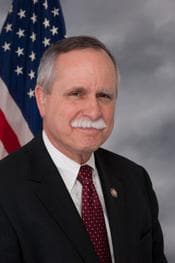
David B. McKinley
Republican Representative
West Virginia
Cosponsors (6)
Committees (9)
• Transportation and Infrastructure Committee• Energy Subcommittee• Energy Subcommittee• Financial Services Committee• Economic Development, Public Buildings, and Emergency Management Subcommittee• Science, Space, and Technology Committee• Energy and Commerce Committee• Oversight and Government Reform Committee• Budget Committee
- Introduced
- In Committee
- On Floor
- Passed Chamber
- Enacted
Energy Savings and Industrial Competitiveness Act This bill revises a variety of programs to encourage energy efficiency in buildings, industry, the federal government, and certain appliances, including by: requiring states and Indian tribes to measure their compliance with certain residential and commercial building energy codes; requiring the Department of Energy (DOE) to provide grants for establishing building training and assessment centers at institutions of higher education; requiring DOE to establish a process to recognize schools for implementing energy efficient and renewable energy projects; directing DOE to carry out an industry-government partnership program to research, develop, and demonstrate new sustainable manufacturing and industrial technologies and processes; establishing a Supply Star program within DOE to identify and promote practices, recognize companies, and recognize products that use highly efficient supply chains that conserve energy, water, and other resources; requiring DOE to establish rebate programs concerning energy efficient electric motors or transformers; revising requirements concerning the energy performance of federal buildings, certification under the Energy Star Program, certification of green buildings, and energy efficiency in federal real estate transactions and programs; and requiring the Department of Housing and Urban Development to establish a demonstration program for energy and water conservation improvements at multifamily residential units.
View Full TextSuggested Questions
Get AI-generated questions to help you understand this bill better
Timeline
Introduced in House
Referred to the Committee on Energy and Commerce, and in addition to the Committees on the Budget, Financial Services, Science, Space, and Technology, Transportation and Infrastructure, and Oversight and Government Reform, for a period to be subsequently determined by the Speaker, in each case for consideration of such provisions as fall within the jurisdiction of the committee concerned.
Referred to the Subcommittee on Energy.
Referred to the Subcommittee on Economic Development, Public Buildings and Emergency Management.
Referred to the Subcommittee on Energy.
Energy
Administrative law and regulatory proceduresAdvisory bodiesAlternative and renewable resourcesBuilding constructionComputers and information technologyCongressional oversightConsumer affairsDepartment of EnergyDepartment of Housing and Urban DevelopmentEducational facilities and institutionsEducation programs fundingElementary and secondary educationEmployment and training programsEnergy efficiency and conservationEnergy pricesEnergy researchEnvironmental Protection Agency (EPA)Environmental technologyGeneral Services AdministrationGovernment buildings, facilities, and propertyGovernment information and archivesGovernment lending and loan guaranteesGovernment studies and investigationsHigher educationHousing and community development fundingHousing finance and home ownershipHousing for the elderly and disabledIndustrial facilitiesLicensing and registrationsLighting and heatingLighting, heating, coolingManufacturingMaterialsPerformance measurementProduct safety and qualityPublic contracts and procurementPublic utilities and utility ratesReal estate businessResearch and developmentResidential rehabilitation and home repairScience and engineering educationSmall businessState and local government operationsTechnology assessmentWater use and supply
To promote energy savings in residential buildings and industry, and for other purposes.
USA115th CongressHR-1443| House
| Updated: 4/25/2017
Energy Savings and Industrial Competitiveness Act This bill revises a variety of programs to encourage energy efficiency in buildings, industry, the federal government, and certain appliances, including by: requiring states and Indian tribes to measure their compliance with certain residential and commercial building energy codes; requiring the Department of Energy (DOE) to provide grants for establishing building training and assessment centers at institutions of higher education; requiring DOE to establish a process to recognize schools for implementing energy efficient and renewable energy projects; directing DOE to carry out an industry-government partnership program to research, develop, and demonstrate new sustainable manufacturing and industrial technologies and processes; establishing a Supply Star program within DOE to identify and promote practices, recognize companies, and recognize products that use highly efficient supply chains that conserve energy, water, and other resources; requiring DOE to establish rebate programs concerning energy efficient electric motors or transformers; revising requirements concerning the energy performance of federal buildings, certification under the Energy Star Program, certification of green buildings, and energy efficiency in federal real estate transactions and programs; and requiring the Department of Housing and Urban Development to establish a demonstration program for energy and water conservation improvements at multifamily residential units.
View Full TextSuggested Questions
Get AI-generated questions to help you understand this bill better
Timeline
Introduced in House
Referred to the Committee on Energy and Commerce, and in addition to the Committees on the Budget, Financial Services, Science, Space, and Technology, Transportation and Infrastructure, and Oversight and Government Reform, for a period to be subsequently determined by the Speaker, in each case for consideration of such provisions as fall within the jurisdiction of the committee concerned.
Referred to the Subcommittee on Energy.
Referred to the Subcommittee on Economic Development, Public Buildings and Emergency Management.
Referred to the Subcommittee on Energy.
David B. McKinley
Republican Representative
West Virginia
Cosponsors (6)
Committees (9)
• Transportation and Infrastructure Committee• Energy Subcommittee• Energy Subcommittee• Financial Services Committee• Economic Development, Public Buildings, and Emergency Management Subcommittee• Science, Space, and Technology Committee• Energy and Commerce Committee• Oversight and Government Reform Committee• Budget Committee
Energy
Related Bills
- Introduced
- In Committee
- On Floor
- Passed Chamber
- Enacted
Administrative law and regulatory proceduresAdvisory bodiesAlternative and renewable resourcesBuilding constructionComputers and information technologyCongressional oversightConsumer affairsDepartment of EnergyDepartment of Housing and Urban DevelopmentEducational facilities and institutionsEducation programs fundingElementary and secondary educationEmployment and training programsEnergy efficiency and conservationEnergy pricesEnergy researchEnvironmental Protection Agency (EPA)Environmental technologyGeneral Services AdministrationGovernment buildings, facilities, and propertyGovernment information and archivesGovernment lending and loan guaranteesGovernment studies and investigationsHigher educationHousing and community development fundingHousing finance and home ownershipHousing for the elderly and disabledIndustrial facilitiesLicensing and registrationsLighting and heatingLighting, heating, coolingManufacturingMaterialsPerformance measurementProduct safety and qualityPublic contracts and procurementPublic utilities and utility ratesReal estate businessResearch and developmentResidential rehabilitation and home repairScience and engineering educationSmall businessState and local government operationsTechnology assessmentWater use and supply